Is Fatty Liver Dangerous? When Should You Worry?
Introduction
Is Fatty Liver Dangerous?
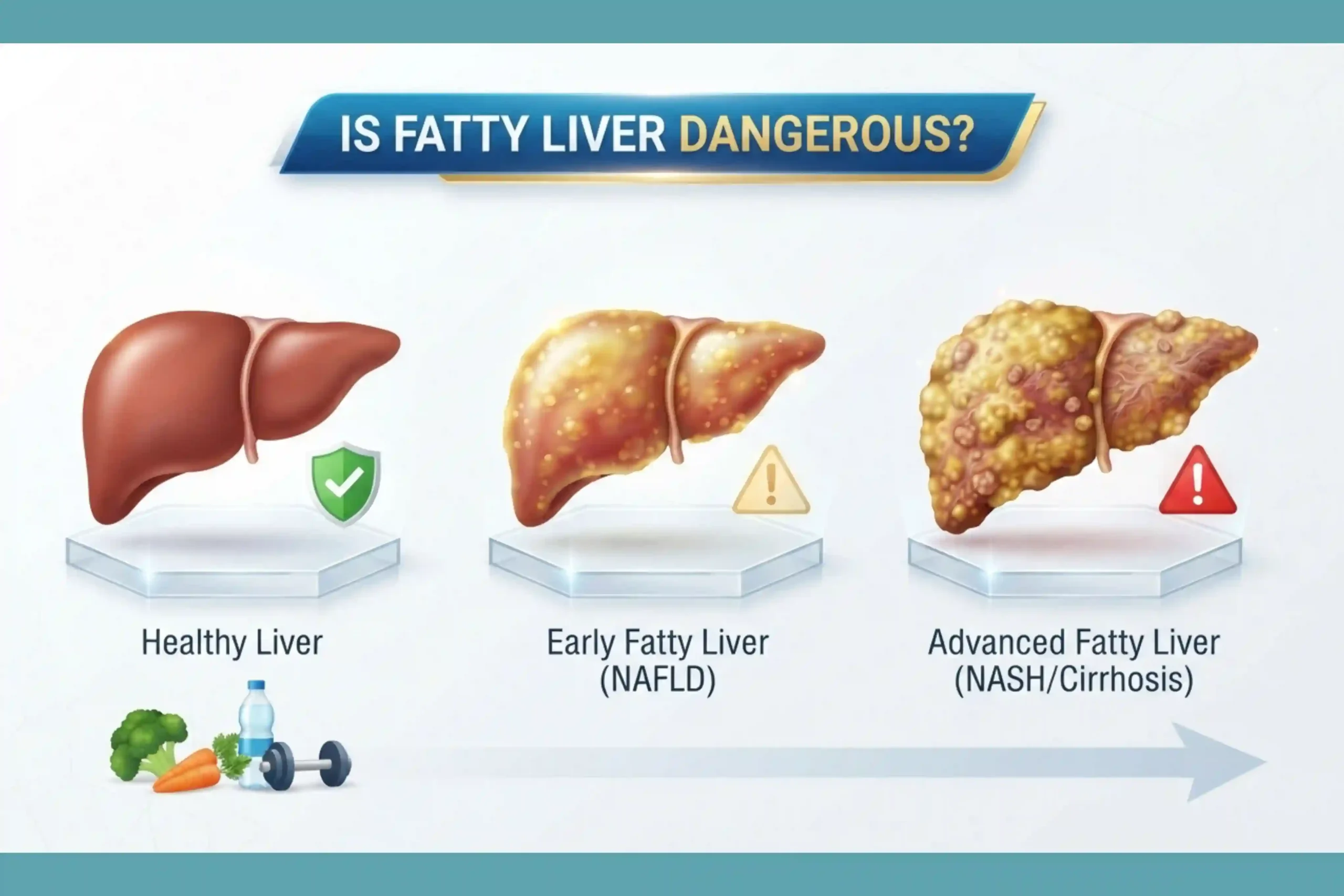
Fatty liver is not always dangerous in its early stage. However, if it is ignored, fat accumulation can cause inflammation, liver scarring (fibrosis), cirrhosis, and even liver failure in some cases.
The risk increases when fatty liver is associated with diabetes, high cholesterol, obesity, or excessive alcohol consumption.
Warning Signs That Need Medical Attention
Fatty liver disease is one of the most common liver conditions today. It occurs when excess fat builds up in the liver. Many people have fatty liver without knowing it because the early stages often do not cause noticeable symptoms.
A common question patients ask is, “Is fatty liver dangerous?” The answer depends on the stage of the disease. While early fatty liver can often be managed with healthy lifestyle changes, advanced stages may lead to serious liver damage if left untreated.
What Is Fatty Liver Disease?
Fatty liver disease develops when too much fat accumulates inside liver cells. There are two main types:
- Non-Alcoholic Fatty Liver Disease (NAFLD)
- Alcoholic Fatty Liver Disease (AFLD)
In many people, fatty liver is reversible, especially when detected early.
Warning Signs That Need Medical Attention
Consult a liver specialist if you notice:
- Persistent pain in the upper right abdomen
- Constant tiredness
- Yellow eyes or skin (jaundice)
- Dark urine
- Swelling in the legs or abdomen
- Unexplained weight loss
- Loss of appetite
- Abnormal Liver Function Test (LFT) results
Early evaluation can help prevent complications.
Stages of Fatty Liver Disease
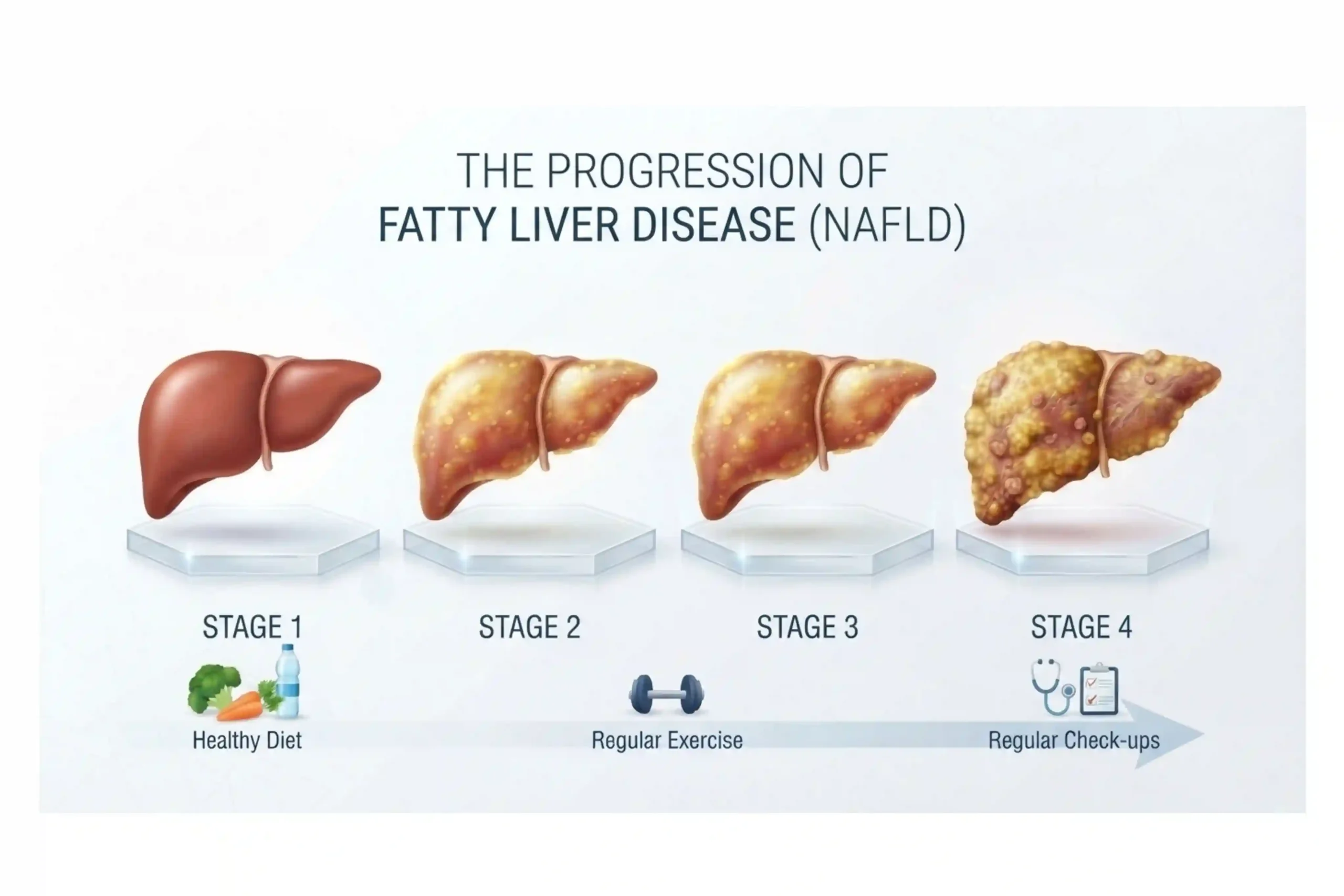
Fatty liver usually progresses through four stages:
Stage 1 – Simple Fatty Liver
Fat builds up in the liver with little or no inflammation.
Stage 2 – Steatohepatitis
Fat accumulation causes inflammation and liver cell damage.
Stage 3 – Fibrosis
Scar tissue begins to replace healthy liver tissue.
Stage 4 – Cirrhosis
Severe scarring affects liver function and increases the risk of liver failure.
Who Is More Likely to Develop Fatty Liver?
Your risk may be higher if you:
- Have excess body weight
- Have Type 2 diabetes
- Have high cholesterol
- Consume alcohol regularly
- Eat processed foods frequently
- Have a sedentary lifestyle
Healthy lifestyle habits can significantly reduce the risk.
How Is Fatty Liver Diagnosed?
Doctors may recommend:
- Liver Function Tests (LFT)
- Ultrasound Abdomen
- FibroScan
- Blood Tests
- CT Scan or MRI (if needed)
These tests help determine the severity of liver damage.Read more:
FibroScan Score Meaning: How to Understand Your Liver Stiffness Report
Can Fatty Liver Be Reversed?
Yes. In many patients, early-stage fatty liver can improve with:
- Healthy eating habits
- Regular physical activity
- Weight management
- Controlling diabetes and cholesterol
- Avoiding alcohol
Following your doctor’s advice is important for long-term liver health.
When Should You See a Liver Specialist?
Seek medical advice if you have:
- Persistent abdominal pain
- Yellow skin or eyes
- Abnormal liver test reports
- Fatty liver seen on ultrasound
- Symptoms that do not improve
Timely diagnosis can prevent serious liver disease.
Conclusion
Fatty liver is not always dangerous, but it should never be ignored. Early diagnosis, healthy lifestyle changes, and regular medical follow-up can help prevent serious complications. If you experience persistent symptoms or have abnormal liver test results, consult a liver specialist for proper evaluation and treatment. For trusted information about fatty liver disease, visit the
National Institute of Diabetes and Digestive and Kidney Diseases (NIDDK)
.