Introduction
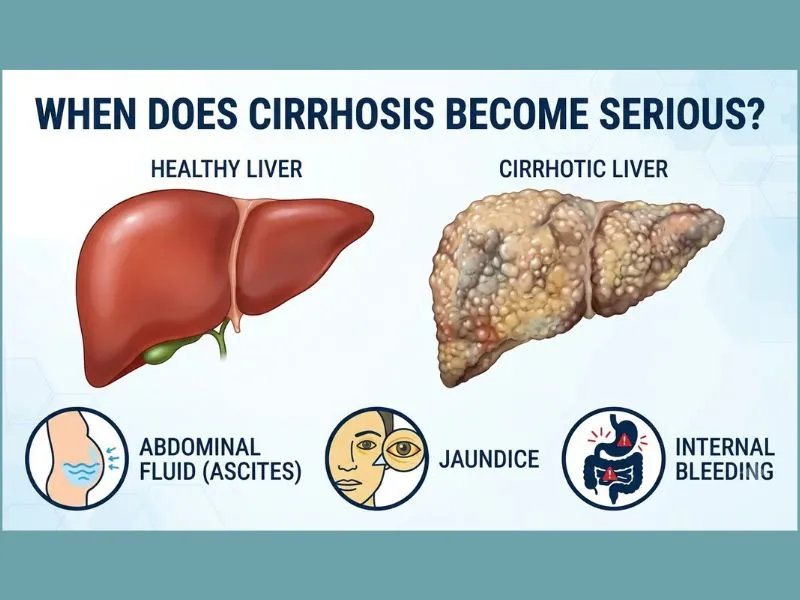
Cirrhosis can reach a serious stage when liver damage affects its function or causes major complications. The liver develops scar tissue that gradually replaces healthy tissue. As a result, the liver may struggle to perform its normal functions.
In the early stages, cirrhosis may cause few or no symptoms. However, advanced disease can lead to abdominal swelling, jaundice, internal bleeding, and confusion. Recognising these warning signs is important because early medical care can help manage complications.
What Is Liver Cirrhosis?
Liver cirrhosis is long-term scarring of the liver. It can develop because of fatty liver disease, chronic hepatitis B or C, alcohol-related liver disease, and certain other conditions.
As scar tissue builds up, it affects blood flow through the liver and reduces its ability to work normally. The speed of progression varies from person to person.
Doctors can often slow further damage by treating the underlying cause and managing complications. Therefore, regular medical follow-ups are important even when symptoms are mild.
When Does Cirrhosis Reach a Serious Stage?
Doctors commonly describe cirrhosis as compensated or decompensated.
1. Compensated Cirrhosis
In compensated cirrhosis, the liver still performs many important functions despite scarring. Some people feel well and may not notice any symptoms.
Doctors may discover the condition through blood tests, ultrasound, or FibroScan. Regular monitoring helps them assess liver function and identify complications early.
2. Decompensated Cirrhosis
Decompensated cirrhosis develops when serious complications appear. These may include fluid buildup in the abdomen, jaundice, bleeding from enlarged veins, or changes in brain function.
This stage requires prompt medical attention. Doctors may recommend specialised treatment and, in some cases, an assessment for liver transplantation.
6 Warning Signs of a Serious Cirrhosis Stage
The following symptoms may indicate worsening liver disease. However, symptoms alone cannot determine the exact stage, so medical assessment is essential.
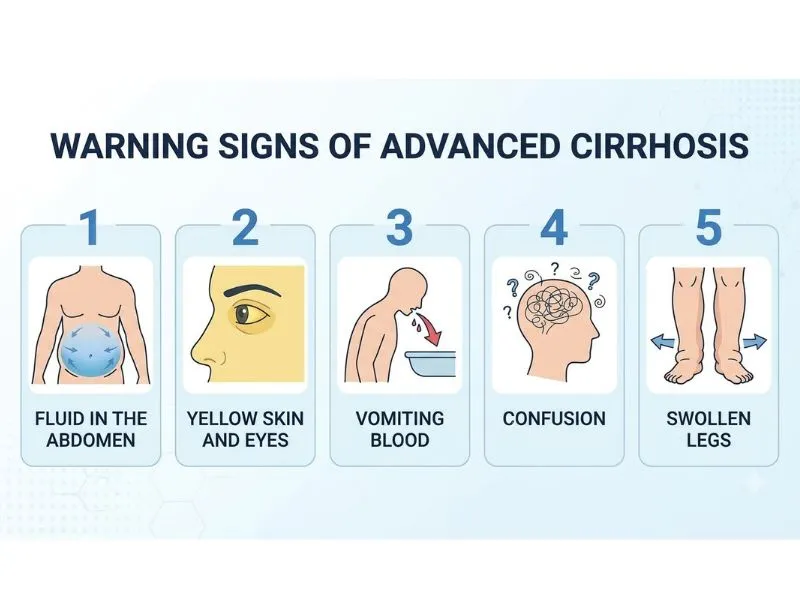
1. Fluid Buildup in the Abdomen
Ascites occurs when excess fluid collects inside the abdomen. The belly may become swollen, tight, or uncomfortable.
Some people also experience reduced appetite or shortness of breath. New abdominal swelling in someone with cirrhosis needs prompt medical assessment because ascites can develop complications.
2. Yellow Skin and Eyes
Jaundice causes the skin and whites of the eyes to turn yellow. It develops when bilirubin builds up in the blood.
Dark urine may also occur. New or worsening jaundice can indicate a change in liver function and should be assessed promptly.
3. Vomiting Blood or Black Stools
Cirrhosis can increase pressure in the blood vessels around the liver. This may cause enlarged veins in the food pipe or stomach.
If these veins rupture, they can cause serious internal bleeding. Warning signs include vomiting blood or passing black, tar-like stools.
These symptoms are a medical emergency. Seek emergency care immediately.
4. Confusion or Unusual Sleepiness
A damaged liver may not remove waste products from the blood effectively. These substances can affect the brain and cause hepatic encephalopathy.
Symptoms may include confusion, unusual sleepiness, memory problems, or changes in behaviour. Sudden confusion requires emergency medical attention.
5. Swelling in the Legs and Feet
Cirrhosis can affect fluid balance and cause swelling in the ankles, feet, and lower legs.
This swelling may occur along with abdominal fluid buildup. Contact a doctor if you notice new or worsening swelling.
6. Unexplained Weight Loss and Weakness
People with advanced liver disease may lose muscle and weight. Poor appetite and nutritional problems can contribute to weakness.
A doctor can assess your nutritional needs and recommend a suitable diet. Do not begin supplements without medical advice.
How Do Doctors Check the Severity of Cirrhosis?
Doctors use several tests to assess liver health and look for complications.
Blood Tests
Blood tests can measure bilirubin, albumin, liver enzymes, blood clotting, kidney function, and blood cell counts. These results help doctors evaluate liver function and overall health.
Normal liver enzyme levels alone do not rule out serious liver disease.
Ultrasound and FibroScan
An ultrasound can show changes in the liver and detect abdominal fluid. FibroScan measures liver stiffness and helps assess liver scarring.
Doctors interpret these results alongside symptoms, blood tests, and other findings.
Endoscopy
An upper gastrointestinal endoscopy allows doctors to check for enlarged veins in the food pipe or stomach. These veins may bleed, so finding them can help doctors decide whether preventive treatment is needed.
Can a Serious Stage of Cirrhosis Be Treated?
Treatment depends on the cause of cirrhosis, liver function, and existing complications.
Doctors may recommend:
- Treating hepatitis B or hepatitis C when appropriate
- Avoiding alcohol completely
- Managing fatty liver disease and diabetes
- Following an appropriate nutrition plan
- Taking prescribed medicines for complications
- Monitoring for liver cancer
- Considering liver transplant assessment when indicated
Established cirrhosis-related scarring generally cannot be completely reversed. However, treating the cause can slow further damage, and treatment can help control complications.
If you want to learn more about liver health, cirrhosis, and available treatment options, consult a liver specialist for proper evaluation and medical guidance.
For additional medical information, read the NIDDK guide to cirrhosis.
When Should You Seek Medical Help?
Contact your doctor promptly if you develop new abdominal swelling, yellow skin or eyes, or increasing leg swelling.
Seek emergency care if you experience:
- Vomiting blood
- Black, tar-like stools
- Sudden confusion or severe drowsiness
- Severe abdominal pain with fever
- Severe difficulty breathing
These symptoms can indicate serious complications and should not be ignored.
Conclusion
Cirrhosis reaches a serious stage when liver function declines or major complications develop. Abdominal fluid buildup, jaundice, internal bleeding, and confusion are important warning signs.
Early diagnosis, regular monitoring, and appropriate treatment can help manage the condition. If you have cirrhosis or notice new symptoms, consult a qualified liver specialist for an individual assessment.