High Bilirubin Symptoms: Causes, Warning Signs & Treatment
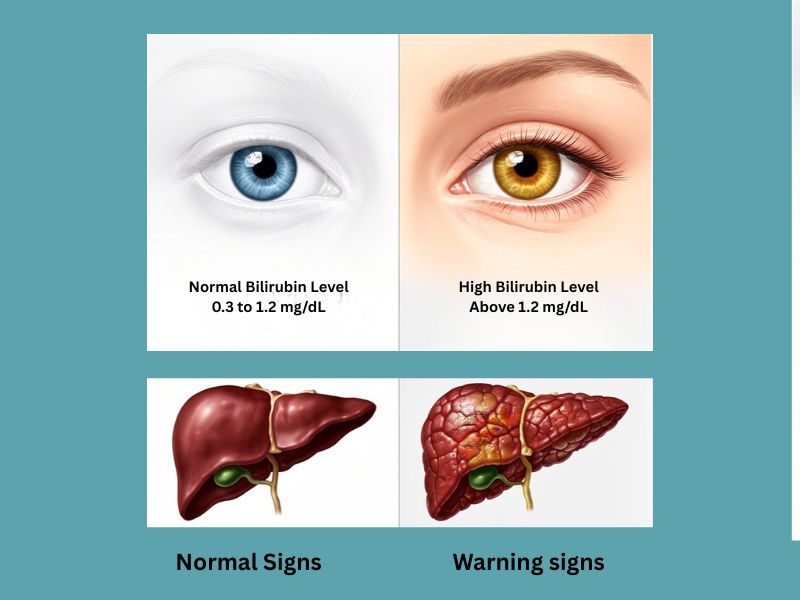
High bilirubin symptoms are commonly seen in people with liver disease, jaundice, or bile duct problems. Many patients notice yellow eyes or dark urine but do not understand the underlying cause. Recognizing high bilirubin symptoms early helps prevent serious liver complications.
Bilirubin is a yellow pigment formed during the breakdown of red blood cells. Normally, the liver removes bilirubin from the body. However, liver dysfunction or bile flow blockage can increase bilirubin levels in the blood.
What Is Bilirubin?
Bilirubin is a natural yellow-colored waste product produced during the breakdown of old red blood cells.
Normal bilirubin levels are usually:
- Total bilirubin: 0.1–1.2 mg/dL
A bilirubin blood test helps doctors identify liver and bile duct problems.
Common High Bilirubin Symptoms
The most common high bilirubin symptoms include:
- Yellowing of eyes and skin (jaundice)
- Dark yellow urine
- Pale-colored stool
- Fatigue and weakness
- Nausea and vomiting
- Loss of appetite
These symptoms may develop gradually or suddenly depending on the cause.
Causes of High Bilirubin Levels
Several medical conditions can increase bilirubin levels:
- Fatty liver disease
- Viral hepatitis
- Gallstones
- Bile duct blockage
- Alcohol-related liver disease
- Liver cirrhosis
Read more:
High SGPT & SGOT Levels: Causes, Symptoms & Treatment
When Are High Bilirubin Symptoms Dangerous?
High bilirubin symptoms become serious if you experience:
- Severe abdominal pain
- Fever with jaundice
- Persistent vomiting
- Confusion or drowsiness
These signs may indicate severe liver disease or bile duct infection and require urgent medical attention.
How Are High Bilirubin Levels Diagnosed?
Doctors usually diagnose the condition using:
- Liver Function Test (LFT)
- Bilirubin blood test
- Ultrasound abdomen
- CT scan or MRI (if required)
Early diagnosis helps prevent complications.
Treatment for High Bilirubin Levels
Treatment depends on the underlying cause.
Common treatments include:
- Medicines for liver disease
- Removal of bile duct stones
- Lifestyle and diet changes
- Avoiding alcohol
For diet tips, read:
Fatty Liver Diet Chart: Best Indian Foods for Liver Health
How to Reduce Bilirubin Naturally?
You can support liver health by:
- Drinking enough water
- Avoiding oily and processed foods
- Exercising regularly
- Maintaining healthy weight
Lifestyle changes help improve liver function naturally.
When Should You Consult a Liver Specialist?
Consult a specialist if:
- Yellow eyes persist
- Bilirubin levels continue rising
- Fever or abdominal pain develops
- Symptoms worsen
Early treatment prevents serious liver complications.According to the
World Health Organization
, liver diseases are increasing globally due to unhealthy lifestyle habits.
Conclusion
High bilirubin symptoms should never be ignored, especially when jaundice or abdominal pain is present. Early diagnosis and proper treatment help prevent severe liver damage and improve recovery.
If symptoms persist, timely consultation with a liver specialist ensures safe and effective management.