Bile Duct Stones: Symptoms, Causes, Diagnosis & Treatment
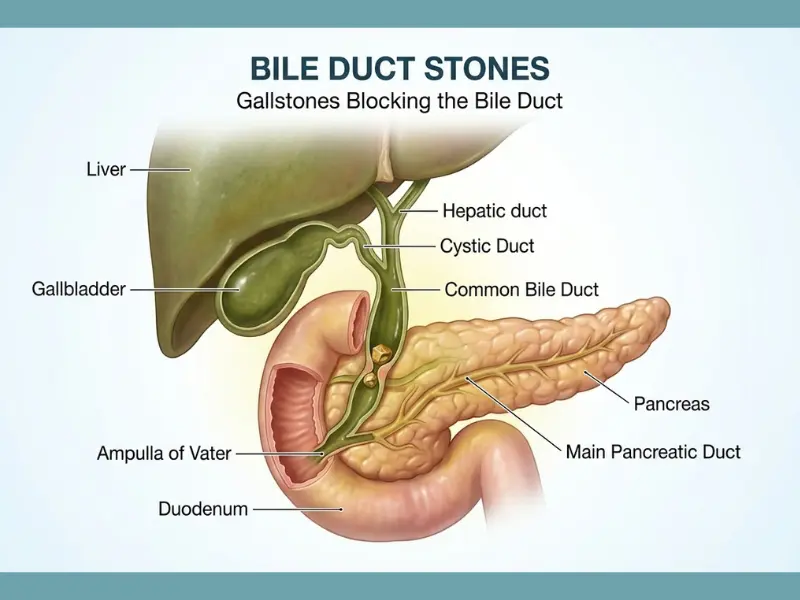
Bile duct stones are stones that become lodged inside the bile ducts. They are also called choledocholithiasis. Most bile duct stones develop in the gallbladder and later move into the common bile duct.
A small stone may sometimes pass on its own, but a stone that blocks the bile duct can cause abdominal pain, jaundice, infection, or pancreatitis. Therefore, suspected bile duct stones should be properly evaluated and treated when necessary.
What Are Bile Duct Stones?
The liver produces bile, which helps the body digest fats. Bile travels through a network of small tubes called bile ducts and eventually reaches the intestine.
Gallstones usually form inside the gallbladder. Sometimes, a stone moves from the gallbladder into the common bile duct and becomes stuck there.
This condition is called bile duct stones or choledocholithiasis.
A blocked bile duct can prevent bile from flowing normally and may cause complications if the blockage continues.
What Causes Bile Duct Stones?
The most common cause is a gallstone moving from the gallbladder into the bile duct.
Gallstones are usually made from substances such as cholesterol or bilirubin. When a gallstone enters the common bile duct, it can become lodged and block the normal flow of bile.
Some people may have bile duct stones without obvious symptoms, while others develop sudden symptoms when the stone causes blockage.
Bile Duct Stones Symptoms
Symptoms can vary depending on whether the stone is causing a blockage.
Common bile duct stones symptoms may include:
- Pain in the upper right or upper middle abdomen
- Abdominal pain after meals
- Nausea or vomiting
- Yellowing of the eyes or skin (jaundice)
- Dark or tea-colored urine
- Pale or light-colored stools
- Fever or chills
- Abnormal liver blood tests
A blocked bile duct can sometimes cause symptoms similar to a gallbladder attack.
When Is Bile Duct Stone Pain Serious?
Severe or persistent abdominal pain, especially when accompanied by fever, chills, jaundice, vomiting, or dark urine, should not be ignored.
These symptoms can indicate a blocked or infected bile duct and require prompt medical assessment.
Can Bile Duct Stones Cause Jaundice?
Yes.
If a stone blocks the common bile duct, bile cannot flow normally into the intestine. This can cause bilirubin to build up in the blood and lead to jaundice.
You may notice:
- Yellow eyes
- Yellow skin
- Dark urine
- Pale stools
- Itching
Jaundice with abdominal pain or fever needs urgent medical evaluation because it may indicate significant bile duct obstruction or infection.
Can Bile Duct Stones Cause Pancreatitis?
Yes.
The bile duct and pancreatic duct open near the intestine. A stone near this area can interfere with pancreatic drainage and may trigger gallstone pancreatitis.
This is one reason why bile duct stones should not be ignored.
If you have severe upper abdominal pain that may spread to the back, especially with vomiting, urgent medical assessment is important.
How Are Bile Duct Stones Diagnosed?
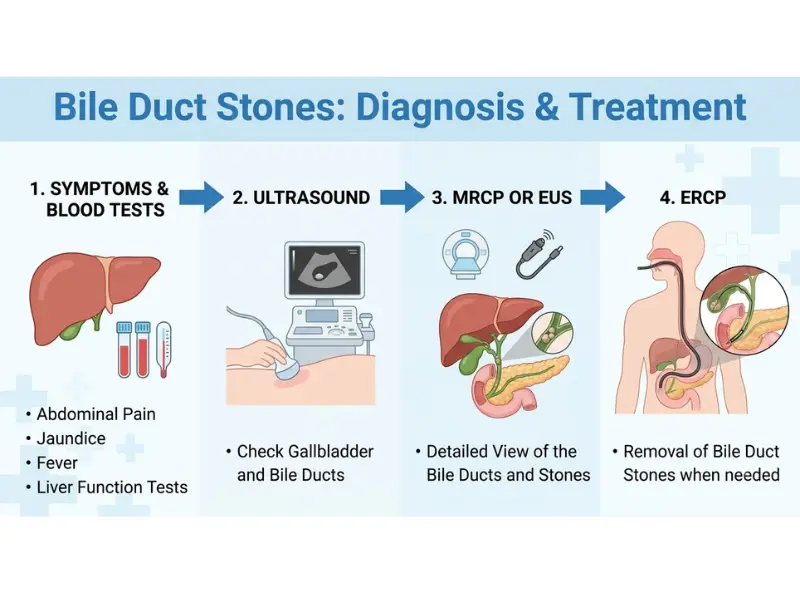
Doctors usually consider your symptoms, medical history, physical examination, blood tests, and imaging studies.
1. Blood Tests
Blood tests may help identify:
- Bilirubin levels
- Liver enzymes
- Signs of inflammation or infection
- Pancreatic enzyme abnormalities
Abnormal liver tests can increase suspicion of bile duct obstruction, but blood tests alone cannot always confirm a bile duct stone.
2. Ultrasound
An abdominal ultrasound is commonly used when gallstones or bile duct problems are suspected.
It can detect gallstones and may show enlargement of the bile duct.
However, a stone inside the common bile duct may not always be clearly visible on routine ultrasound.
3. MRCP
MRCP (Magnetic Resonance Cholangiopancreatography) is a special MRI-based test that provides detailed images of the bile ducts and pancreatic ducts.
It can help doctors look for stones and other abnormalities without inserting an endoscope into the bile duct.
4. EUS
Endoscopic ultrasound (EUS) combines endoscopy with ultrasound to obtain detailed images of the digestive tract and nearby bile ducts.
For patients with an intermediate likelihood of bile duct stones, ASGE guidance supports using EUS or MRCP to help confirm the diagnosis.
For more detailed information about gallstones, their symptoms, diagnosis, and treatment, visit the NIDDK: Gallstones resource.
How Are Bile Duct Stones Treated?
Treatment depends on the stone’s location, symptoms, degree of blockage, infection, and the patient’s overall condition.
ERCP
One of the most common procedures used to remove a stone from the common bile duct is ERCP (Endoscopic Retrograde Cholangiopancreatography).
During ERCP, a flexible endoscope is passed through the mouth into the digestive tract. The doctor then accesses the bile duct and can remove a stone using specialized instruments.
ERCP is primarily used as a treatment procedure, rather than simply as a diagnostic test, because it carries potential risks.
Gallbladder Surgery
If bile duct stones originated from the gallbladder, removing the gallbladder may be recommended after the bile duct has been cleared, depending on the patient’s condition.
This helps reduce the chance of future gallstone-related problems. NIDDK identifies cholecystectomy, or gallbladder removal, as the usual treatment for symptomatic gallstones.
Surgery for Difficult Stones
Most bile duct stones can be managed endoscopically, but some stones may be large, difficult to remove, or associated with complex bile duct problems.
In such situations, additional endoscopic techniques or surgery may be considered based on the individual case and available expertise.
Can Bile Duct Stones Go Away on Their Own?
Some small bile duct stones may pass naturally into the intestine.
However, you should not assume that a suspected bile duct stone will pass safely on its own.
A stone can remain stuck and cause:
- Bile duct obstruction
- Jaundice
- Cholangitis
- Pancreatitis
Because these complications can become serious, proper medical evaluation is important.
What Happens If Bile Duct Stones Are Left Untreated?
An untreated bile duct obstruction can lead to serious complications.
Possible complications include:
Cholangitis
Cholangitis is an infection of the bile ducts. It can cause fever, chills, abdominal pain, and jaundice.
Pancreatitis
A stone can interfere with pancreatic drainage and trigger inflammation of the pancreas.
Persistent Jaundice
Continued bile duct obstruction can cause bilirubin to build up and produce jaundice.
Liver Problems
Long-lasting obstruction can affect normal bile flow and may damage the biliary system.
Therefore, symptoms suggesting bile duct obstruction should be evaluated promptly.
When Should You See a Doctor?
You should seek medical attention if you have:
- Severe or persistent upper abdominal pain
- Yellow eyes or skin
- Fever or chills
- Dark urine
- Pale stools
- Repeated vomiting
- Previous gallstones with new symptoms
- Abnormal liver function tests
Jaundice with fever and abdominal pain can be a warning sign of bile duct infection and requires urgent medical evaluation.
If you have suspected bile duct stones or recurrent gallstone-related symptoms, consult a gastroenterology specialist or an HPB specialist for appropriate evaluation and treatment.
Can Bile Duct Stones Be Prevented?
Because most bile duct stones originate from gallstones, reducing the risk of gallstone formation may help.
Healthy habits include:
- Maintaining a healthy weight
- Avoiding crash diets and very rapid weight loss
- Eating a balanced diet
- Including adequate fiber
- Staying physically active
- Following your doctor’s advice if you already have gallstones
NIDDK recommends maintaining a healthy weight and avoiding rapid weight loss to help reduce gallstone risk.
Conclusion
Bile duct stones are gallstones that have moved into and become lodged in the bile ducts. They can cause abdominal pain, jaundice, infection, and pancreatitis.
Diagnosis may involve blood tests, ultrasound, MRCP, or EUS. When a stone is confirmed or strongly suspected to be causing obstruction, ERCP can often be used to remove it. The treatment plan depends on the stone, symptoms, complications, and the patient’s overall health.
If you develop abdominal pain with jaundice, fever, chills, or vomiting, do not delay medical evaluation.