Pancreatic Cancer: Symptoms, Causes, Diagnosis & Treatment
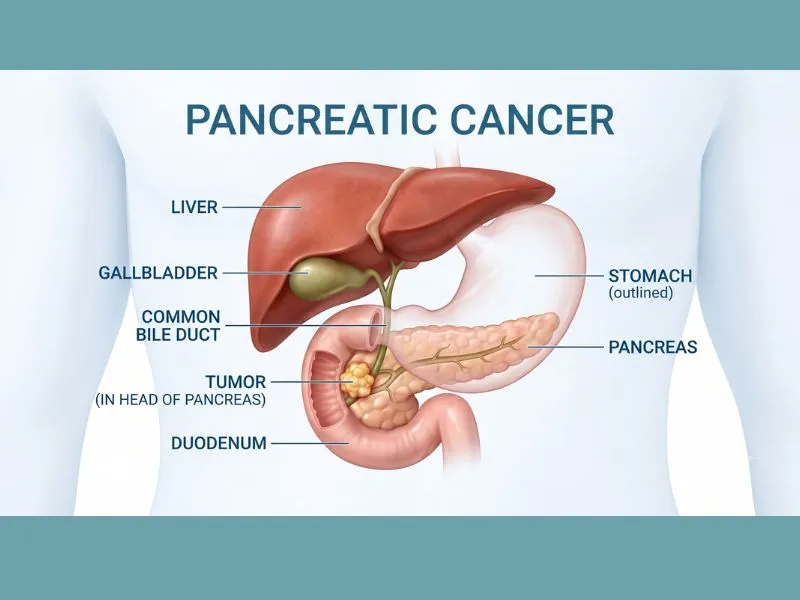
Pancreatic cancer is a disease in which abnormal cells grow in the pancreas and form a tumor. The pancreas is an organ located behind the stomach. It helps the body digest food and control blood sugar levels.
Pancreatic cancer may not cause clear symptoms in its early stages. As the disease grows, it may cause abdominal pain, jaundice, unexplained weight loss, and digestive problems. Early medical evaluation can help identify the cause of symptoms and guide treatment.
This blog explains pancreatic cancer in simple language, including its symptoms, risk factors, diagnosis, and available treatment options.
What Is Pancreatic Cancer?
The pancreas is a gland located deep inside the abdomen, behind the stomach. It has two important functions:
- Digestive function: It produces enzymes that help break down food.
- Hormonal function: It produces hormones, including insulin, that help control blood sugar.
Pancreatic cancer develops when cells in the pancreas begin to grow abnormally and form a tumor.
The most common type is pancreatic ductal adenocarcinoma (PDAC), which usually starts in the cells lining the pancreatic ducts. A less common type is a pancreatic neuroendocrine tumor, which develops from hormone-producing cells.
The type and location of the tumor help doctors plan the appropriate treatment.
What Are the Symptoms of Pancreatic Cancer?
Pancreatic cancer may not cause noticeable symptoms at first. When symptoms appear, they can be similar to those of other digestive conditions.
Common symptoms may include:
1. Abdominal Pain
Some people experience pain in the upper or middle abdomen. The pain may spread toward the back and may become more noticeable after eating or when lying down.
Abdominal or back pain can have many causes, so it does not automatically mean a person has pancreatic cancer.
2. Jaundice
Jaundice causes yellowing of the skin and the whites of the eyes. It can occur when a tumor, particularly one near the head of the pancreas, blocks the common bile duct.
Other signs may include dark urine, pale stools, and itchy skin.
3. Unexplained Weight Loss
Some people lose weight without changing their diet or exercise routine. This may happen because of reduced appetite, digestive difficulties, or the effects of cancer on the body.
4. Loss of Appetite and Fatigue
A person may feel full quickly, lose interest in food, or experience unusual tiredness. These symptoms are not specific to pancreatic cancer but should be assessed if they persist.
5. Digestive Problems
When the pancreas does not release enough digestive enzymes, food—especially fat—may not be digested properly. This can lead to bloating, loose stools, greasy or foul-smelling stools, and weight loss.
6. Changes in Blood Sugar
The pancreas helps regulate blood sugar. Some people may develop diabetes or experience changes in blood sugar levels. However, diabetes is common and usually does not mean pancreatic cancer is present.
Important: These symptoms can occur with many other conditions. Persistent or unexplained symptoms should be discussed with a healthcare professional. The American Cancer Society also notes that early pancreatic cancer may not cause obvious symptoms.
What Causes Pancreatic Cancer?
There is no single known cause of pancreatic cancer. It develops when changes occur in the DNA of pancreatic cells, causing them to grow and divide abnormally.
Some factors may increase the chance of developing pancreatic cancer. Having a risk factor does not mean that a person will definitely develop the disease.
Risk Factors for Pancreatic Cancer
Smoking
Smoking is an established risk factor for pancreatic cancer. Avoiding tobacco and getting support to stop smoking can help reduce health risks.
Chronic Pancreatitis
Chronic pancreatitis is long-term inflammation of the pancreas. It is associated with an increased risk of pancreatic cancer, particularly in some people with longstanding disease.
Diabetes
Diabetes is associated with pancreatic cancer. In some cases, pancreatic cancer may also affect blood sugar control. Most people with diabetes, however, do not develop pancreatic cancer.
Excess Body Weight
Having excess body weight may increase the risk of pancreatic cancer. Maintaining a healthy weight and following balanced lifestyle habits can support overall health.
Family History and Inherited Conditions
A family history of pancreatic cancer or certain inherited genetic conditions may increase risk. People with a strong family history should discuss their personal risk with a healthcare professional.
Risk factors are not a diagnosis. A doctor can help determine whether further assessment or genetic counselling may be appropriate.
How Is Pancreatic Cancer Diagnosed?
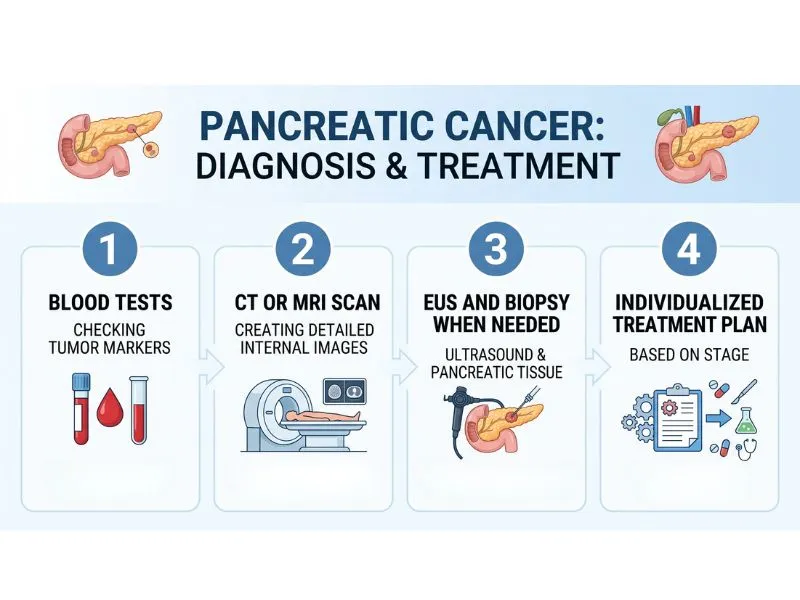
There is no single test that can diagnose every case of pancreatic cancer. Doctors use symptoms, medical history, physical examination, imaging, and sometimes a tissue sample to assess the condition.
1. Blood Tests
Blood tests may check liver function, bilirubin, and other health indicators. A tumor marker called CA 19-9 may be measured in some patients.
CA 19-9 is not a stand-alone cancer test. It can be raised in some non-cancerous conditions and may be normal in some people with pancreatic cancer.
2. CT Scan
A contrast-enhanced CT scan can provide detailed images of the pancreas and nearby structures. It helps doctors assess the tumor’s location, size, and relationship to nearby blood vessels and organs.
3. MRI and MRCP
MRI provides detailed images of soft tissues. MRCP is a special MRI technique used to examine the pancreatic and bile ducts. These tests may help clarify findings and assess the ducts.
4. Endoscopic Ultrasound (EUS)
EUS uses a small ultrasound probe attached to an endoscope. It allows doctors to obtain close-up images of the pancreas from inside the digestive tract.
In selected cases, a fine needle can be used during EUS to collect a tissue sample for testing.
5. Biopsy
A biopsy involves taking a small sample of tissue for examination under a microscope. It may be needed to confirm the diagnosis, especially when treatment such as chemotherapy is planned before surgery or when the diagnosis is uncertain.
What Are the Stages of Pancreatic Cancer?
Staging describes how far the cancer has grown or spread. It helps the medical team plan treatment.
In general, pancreatic cancer may be described as:
- Localized: Cancer is limited to the pancreas.
- Locally advanced: Cancer has grown into nearby structures or blood vessels and may not be removable with surgery at that time.
- Metastatic: Cancer has spread to distant parts of the body, such as the liver or lungs.
Doctors also assess whether the tumor is resectable, meaning it can be removed safely with surgery, or whether other treatment is needed first.
The stage alone does not determine every treatment decision. The tumor’s location, involvement of blood vessels, overall health, and test results are also important.
What Are the Treatment Options for Pancreatic Cancer?
Treatment depends on the cancer type, stage, tumor location, and the patient’s overall health. A treatment plan may include surgery, chemotherapy, radiation therapy, or a combination of treatments.
1. Surgery
Surgery may be considered when the tumor can be removed safely and completely.
Common operations include:
Whipple Procedure: This operation is usually used for tumors in the head of the pancreas. It involves removing the head of the pancreas, the duodenum, gallbladder, part of the bile duct, and sometimes part of the stomach. The remaining digestive organs are then reconnected. Pancreatic surgery may be considered when the tumor can be removed safely and completely.
Distal Pancreatectomy: This operation removes the body and tail of the pancreas. The spleen may also need to be removed, depending on the tumor and surgical plan.
Total Pancreatectomy: In selected cases, the entire pancreas may need to be removed. This results in the need for lifelong insulin and pancreatic enzyme replacement.
Not every patient with pancreatic cancer is suitable for surgery. The decision requires detailed assessment by a specialist team. “For more information about pancreatic cancer treatment options, visit the Pancreatic Cancer Treatment – NCI resource.”
2. Chemotherapy
Chemotherapy uses medicines to destroy cancer cells or slow their growth. It may be given before surgery to help treat the cancer, after surgery to reduce the risk of recurrence, or as the main treatment when surgery is not possible.
The medicines and treatment schedule depend on the individual case.
3. Radiation Therapy
Radiation therapy uses focused energy to damage cancer cells. It may be considered in selected situations, sometimes alongside chemotherapy.
Its role depends on the tumor’s location, stage, and the overall treatment plan.
4. Targeted Therapy and Other Treatments
Some tumors have specific genetic changes that may make targeted medicines useful. In selected cases, doctors may recommend molecular or genetic testing to help guide treatment.
Clinical trials may also be an option for eligible patients.
5. Supportive and Palliative Care
Supportive care helps manage pain, nausea, appetite problems, digestive difficulties, and other symptoms. It can be provided alongside cancer treatment.
Palliative care focuses on comfort and quality of life and may be appropriate at different stages of illness.
Treatment options may include surgery, chemotherapy, radiation, targeted therapy, and symptom management.
Can Pancreatic Cancer Be Prevented?
There is no guaranteed way to prevent pancreatic cancer. However, some lifestyle steps may help reduce certain risk factors and support general health:
- Avoid smoking and tobacco products.
- Maintain a healthy body weight.
- Follow a balanced diet.
- Stay physically active.
- Manage diabetes with medical guidance.
- Discuss a strong family history of pancreatic cancer with a healthcare professional.
These steps cannot eliminate the risk. People with inherited risk factors may need individualized advice.
When Should You See a Doctor?
Consult a healthcare professional if you experience persistent or unexplained symptoms such as:
- Yellowing of the skin or eyes
- Ongoing upper abdominal or back pain
- Unexplained weight loss
- Persistent loss of appetite
- Repeated vomiting or digestive difficulties
- New or unusual changes in blood sugar, especially with other symptoms
Jaundice accompanied by fever, chills, or significant abdominal pain needs urgent medical assessment. These symptoms may indicate bile duct obstruction or infection and can have causes other than cancer.
If pancreatic cancer is suspected, a specialist can review the reports and help plan the next steps.
Conclusion
Pancreatic cancer develops when abnormal cells grow in the pancreas. It may not cause noticeable symptoms in the early stages, but symptoms can include jaundice, abdominal or back pain, unexplained weight loss, appetite changes, and digestive problems.
Diagnosis may involve blood tests, CT or MRI scans, EUS, and sometimes a biopsy. Treatment can include surgery, chemotherapy, radiation therapy, targeted treatments, and supportive care, depending on the individual case.
If you have persistent symptoms or concerns about pancreatic health, seek medical advice rather than relying on symptoms alone.