Gallbladder Stones: Symptoms, Causes & Treatment
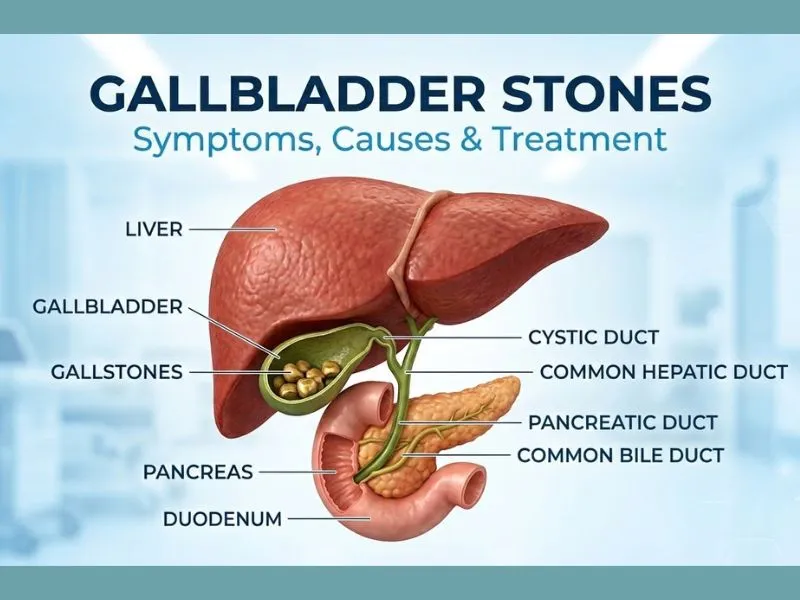
Gallbladder stones, also called gallstones, are hard pieces that form inside the gallbladder. They may be very small or much larger.
Many people have gallstones without any symptoms. These are called silent gallstones. However, a stone can block a bile duct and cause pain, nausea, vomiting, or other complications.
What Are Gallbladder Stones?
The gallbladder is a small organ below the liver. It stores bile, which helps the body digest fat.
Sometimes, substances in bile form hard stones. The two main types are cholesterol stones and pigment stones. Doctors also use the term cholelithiasis for gallstones.
What Causes Gallbladder Stones?
Gallstones can develop when bile contains too much cholesterol or bilirubin. They may also form when the gallbladder does not empty well.
In addition, certain factors can raise the risk. These include obesity, rapid weight loss, diabetes, family history, and some dietary patterns.
Gallbladder Stones Symptoms
Not everyone with gallstones feels pain. Symptoms usually appear when a stone blocks a bile duct.
Common symptoms include:
- Pain in the upper right abdomen
- Pain in the upper middle abdomen
- Pain after a heavy meal
- Nausea
- Vomiting
- Pain that may spread to the back or right shoulder
A gallbladder attack can last for several hours. It often happens after a heavy meal and may occur in the evening or at night.
Where Is Gallbladder Stone Pain Felt?
Gallbladder stone pain usually affects the upper right side of the abdomen. Some people feel it in the upper middle abdomen.
The pain may also travel to the back or right shoulder. Still, several other conditions can cause similar pain. Therefore, proper medical evaluation is important.
What Are Silent Gallstones?
Silent gallstones do not cause symptoms. Many people discover them during an ultrasound or another test done for a different reason.
In most cases, silent gallstones do not need treatment. Your doctor may simply advise you to watch for symptoms.
How Are Gallbladder Stones Diagnosed?
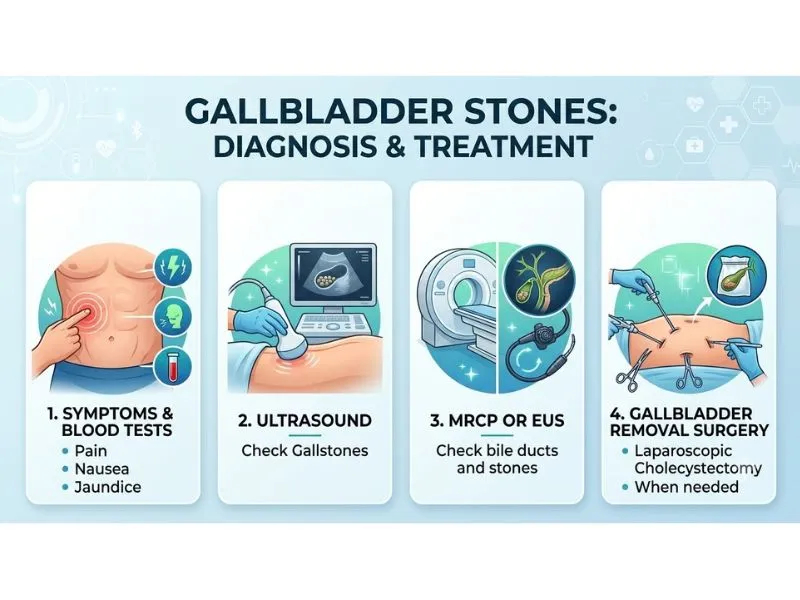
Doctors usually consider your symptoms, medical history, physical examination, blood tests, and imaging results.
Ultrasound
An abdominal ultrasound is the main imaging test for gallstones. It can show stones inside the gallbladder and provide information about the biliary system.
Blood Tests
Blood tests can show signs of infection, inflammation, jaundice, or problems involving the liver, gallbladder, or pancreas.
CT, MRI and MRCP
Doctors may use CT or MRI when they need more information. MRCP can provide detailed images of the bile ducts.
EUS and ERCP
Endoscopic ultrasound (EUS) can help find small stones. Doctors may use ERCP when a stone has moved into the common bile duct and needs removal.
For more detailed information about gallstones, diagnosis, and treatment, visit the NIDDK: Gallstones resource.
How Are Gallbladder Stones Treated?
Treatment depends on whether the stones cause symptoms or complications.
Silent Gallstones
If gallstones cause no symptoms, treatment is often not needed. Your doctor may recommend observation.
Symptomatic Gallstones
When gallstones cause repeated pain or complications, doctors often recommend gallbladder removal surgery, called cholecystectomy.
Gallbladder Removal Surgery
Laparoscopic cholecystectomy is a common treatment for symptomatic gallstones. The surgeon removes the gallbladder through small abdominal incisions.
After surgery, bile flows directly from the liver into the small intestine. You can live normally without a gallbladder.
Can Gallbladder Stones Be Treated Without Surgery?
Some medicines can dissolve certain cholesterol stones. However, doctors use these medicines only in selected cases.
Treatment may take months or even years. Also, stones can return after treatment. Therefore, non-surgical treatment is not the usual option for most people with symptomatic gallstones.
For more information, read our related article on gallbladder stone treatment without surgery.
What Complications Can Gallstones Cause?
Gallstones can cause problems when they block the gallbladder or bile ducts.
Possible complications include:
- Cholecystitis: inflammation of the gallbladder
- Bile duct stones: a stone moves into the common bile duct
- Cholangitis: infection of the bile ducts
- Gallstone pancreatitis: inflammation of the pancreas caused by a stone
These problems need medical attention.
When Should You See a Doctor?
Do not ignore severe or ongoing abdominal pain.
Seek prompt medical care when you have:
- Severe abdominal pain
- Fever or chills
- Repeated vomiting
- Yellow skin or eyes
- Dark urine
- Light-colored stools
These symptoms may indicate a serious gallstone complication.
If you have repeated gallbladder pain or suspected gallstones, consult a gastroenterology specialist for proper evaluation.
How Can You Reduce the Risk of Gallstones?
Healthy habits may help reduce the risk.
Try to:
- Maintain a healthy weight
- Lose weight gradually
- Eat more fiber-rich foods
- Limit excess sugar and refined carbohydrates
- Stay physically active
- Avoid crash diets
Rapid weight loss can increase the risk of gallstones. A balanced eating plan and regular activity can support healthy weight management.
Conclusion
Gallbladder stones are common and may not cause symptoms. However, they can lead to pain and serious complications when they block the bile ducts.
Ultrasound is commonly used for diagnosis. Doctors may also use blood tests, CT, MRI, MRCP, EUS, or ERCP when needed. For symptomatic gallstones, cholecystectomy is a common treatment.
Early evaluation can help identify complications and guide appropriate treatment.