Pancreatic Cyst: Symptoms, Causes, Diagnosis & Treatment
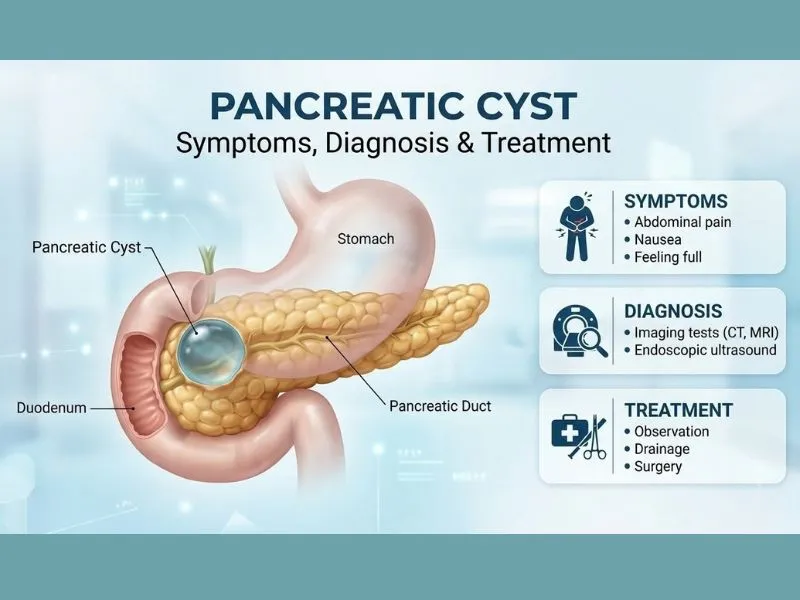
A pancreatic cyst is a fluid-filled sac that develops in or on the pancreas. Doctors often find these cysts during an ultrasound, CT scan, or MRI done for another health problem.
The good news is that many pancreatic cysts are not cancerous. However, some types can develop cancer-related changes. Therefore, doctors look at the cyst’s size, location, appearance, and type before deciding on treatment.
What Is a Pancreatic Cyst?
The pancreas is an organ located behind the stomach. It helps with digestion and also produces hormones such as insulin.
A pancreatic cyst is a sac that contains fluid or other material. Doctors classify pancreatic cysts into different types. Some are harmless, while others need regular monitoring or treatment.
One common type is a pseudocyst. It can develop after pancreatitis or an injury to the abdomen. Other cysts include IPMN, mucinous cystic neoplasms, and serous cystic lesions. Each type has different features and risks. Mayo Clinic
Are Pancreatic Cysts Dangerous?
This is one of the most common concerns after a scan shows a pancreatic cyst.
Not every pancreatic cyst is dangerous. Many remain stable and never cause serious problems. Some cysts, however, have the potential to become cancerous.
For that reason, your doctor may recommend follow-up imaging instead of immediate surgery. The decision depends on the cyst type and its features.
What Causes a Pancreatic Cyst?
The cause depends on the type of cyst.
In many cases, doctors cannot identify a clear cause. However, pseudocysts often develop after pancreatitis. Abdominal trauma can also lead to a pseudocyst.
Gallstones and heavy alcohol use can cause pancreatitis, which in turn can lead to pancreatic pseudocysts.
Pancreatic Cyst Symptoms
Many people with a pancreatic cyst have no symptoms. Doctors often discover the cyst by chance during an abdominal scan.
When symptoms do occur, they may include:
- Ongoing upper abdominal pain
- Pain that spreads to the back
- Nausea or vomiting
- Unexplained weight loss
- Feeling full quickly while eating
The symptoms can vary depending on the cyst’s size and location.
Can a Pancreatic Cyst Cause Back Pain?
Yes. A pancreatic cyst can cause pain in the upper abdomen that may spread toward the back.
However, back pain has many possible causes. Therefore, doctors need to consider your symptoms along with imaging findings before linking the pain to a pancreatic cyst.
How Is a Pancreatic Cyst Diagnosed?
Doctors usually begin with your medical history, symptoms, physical examination, and imaging reports.
Ultrasound
An ultrasound may detect a cyst and provide an initial view of the pancreas. Doctors may then order more detailed tests.
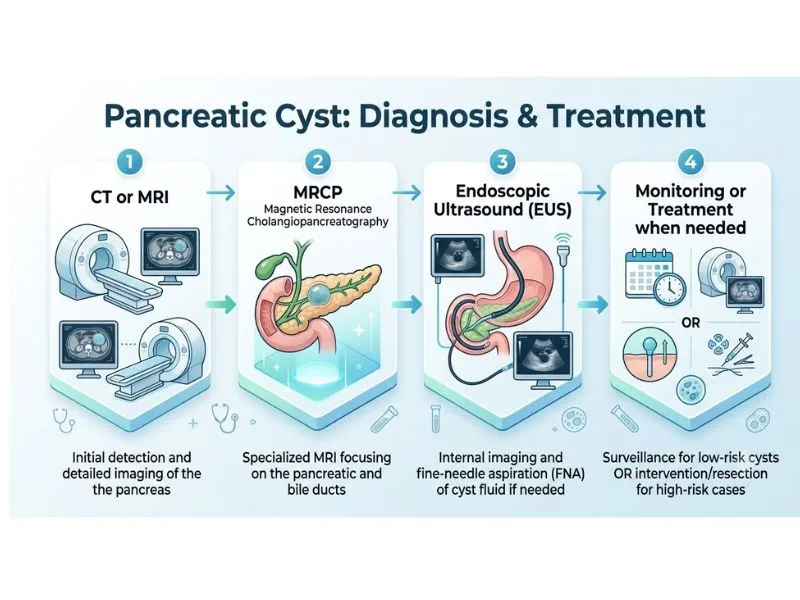
CT Scan
A CT scan can show the cyst’s size, location, and structure. It can also help doctors look for changes around the pancreas.
MRI and MRCP
MRI can provide detailed images of a pancreatic cyst. MRCP, which is a special MRI technique, can also show the pancreatic duct and nearby structures.
Doctors often use MRI/MRCP when they need a closer look or when they want to monitor a known cyst.
In selected cases, doctors can use EUS to collect fluid or cells from the cyst for laboratory testing. This information can help with cyst classification and risk assessment.
How Do Doctors Decide if a Pancreatic Cyst Needs Treatment?
Doctors do not treat every cyst in the same way.
They usually consider:
- Type of cyst
- Size of the cyst
- Location
- Growth over time
- Symptoms
- Changes in the cyst wall
- Relationship with the pancreatic duct
- Other high-risk features
ACG guidance recommends evaluating pancreatic cysts based on their clinical and imaging features rather than treating every cyst automatically.
Pancreatic Cyst Treatment
Treatment depends on the type and risk of the cyst.
Regular Monitoring
Some pancreatic cysts only need watchful monitoring.
Your doctor may recommend repeat MRI, MRCP, CT, or another imaging test after a certain period. The goal is to check whether the cyst changes in size or appearance.
Many benign cysts can remain under observation for years without surgery.
Cyst Drainage
Doctors may drain a symptomatic or enlarging pseudocyst.
An endoscopic procedure can sometimes create a pathway for the fluid to drain into the stomach or intestine. In some cases, doctors may use a tube or stent.
The best approach depends on the cyst’s location and the patient’s condition.
Surgery
Some pancreatic cysts require surgical removal because they have features that suggest a higher risk of cancer.
Surgery may also be considered when a cyst causes significant symptoms, grows, or shows concerning changes.
Doctors carefully weigh the benefits of surgery against its risks. A specialist evaluation helps determine the safest option.
Can a Pancreatic Cyst Become Cancerous?
Some pancreatic cysts can become cancerous or may already contain high-risk cells. However, many pancreatic cysts never become cancer.
Doctors therefore focus on identifying the cyst type and looking for features that increase risk. Regular monitoring can help detect important changes early.
A diagnosis of a pancreatic cyst does not automatically mean pancreatic cancer.
Pancreatic Cyst and Pancreatitis
A pancreatic cyst and pancreatitis can be closely connected.
A pseudocyst often develops after an episode of pancreatitis. In some patients, a cyst can also contribute to pancreatic duct problems or repeated inflammation.
Because of this connection, doctors may ask about previous episodes of pancreatitis, gallstones, alcohol exposure, or abdominal injury.
When Should You See a Doctor?
See a doctor when you have persistent upper abdominal pain, repeated vomiting, unexplained weight loss, or other symptoms that do not improve.
A fever with ongoing abdominal pain may indicate infection. Also, sudden severe symptoms can require urgent medical attention.
If a scan has already found a pancreatic cyst, do not panic. Instead, discuss the report with a doctor experienced in pancreatic conditions. The right assessment can clarify whether you need monitoring, further testing, drainage, or surgery.
You can also consult a pancreatic surgery specialist for expert evaluation.
Can Pancreatic Cysts Be Prevented?
You cannot prevent every type of pancreatic cyst because many develop without a known cause.
However, you can reduce the risk of conditions that may lead to pseudocysts. Avoiding alcohol and smoking can help reduce pancreatitis risk. Managing gallstones and other pancreatic conditions also matters.
Regular medical follow-up also becomes important when a doctor has already identified a pancreatic cyst.
Frequently Asked Questions
Is every pancreatic cyst cancerous?
No. Many pancreatic cysts are benign and never become cancerous. Some types, however, have malignant potential, so doctors may recommend monitoring or further evaluation.
Can a pancreatic cyst disappear?
Some pseudocysts can improve or resolve, especially after the underlying pancreatitis improves. Other cyst types may remain and require long-term monitoring.
Is surgery always needed for a pancreatic cyst?
No. Many cysts only need observation. Surgery is considered when symptoms, cyst type, growth, or other high-risk features make treatment necessary.
Which test is best for a pancreatic cyst?
There is no single test for every patient. CT, MRI/MRCP, and EUS each provide useful information. Doctors choose the test based on the cyst’s features and the clinical situation.
Conclusion
A pancreatic cyst is a fluid-filled growth in or on the pancreas. Many cysts do not cause symptoms, and many are not cancerous. Still, some cysts need closer evaluation because they can have cancer-related potential.
Doctors may use CT, MRI, MRCP, and EUS to understand the cyst. After that, they may recommend regular monitoring, drainage, or surgery based on the cyst’s type and risk features.
If you have been told that you have a pancreatic cyst, a specialist evaluation can help you understand exactly what it means and what should happen next.