Chronic Pancreatitis: Symptoms, Causes, Diagnosis & Treatment
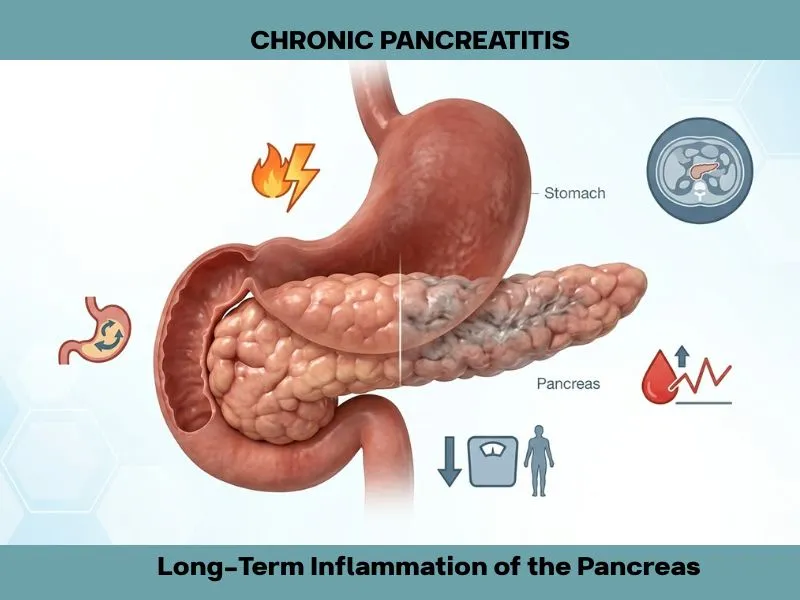
Chronic pancreatitis is a long-term inflammation of the pancreas. Unlike acute pancreatitis, which can improve after treatment, chronic pancreatitis can cause lasting damage to the pancreas over time.
The pancreas is an important organ located behind the stomach. It helps the body digest food by producing digestive enzymes and also makes hormones such as insulin that help control blood sugar.
Chronic pancreatitis can affect both digestion and blood sugar control. Early evaluation and appropriate treatment can help manage symptoms and reduce complications.
What Is Chronic Pancreatitis?
Chronic pancreatitis happens when inflammation and damage to the pancreas continue over a long period.
Repeated inflammation can cause permanent changes and scarring in the pancreas. Over time, the pancreas may not produce enough digestive enzymes or insulin.
The condition can develop gradually, and some people may have symptoms for a long time before a diagnosis is made.
What Causes Chronic Pancreatitis?
There are several possible causes of chronic pancreatitis.
Common causes and risk factors include:
- Heavy alcohol use
- Genetic or hereditary conditions
- Blockage or narrowing of the pancreatic duct
- High levels of triglycerides
- High calcium levels in the blood
- Certain medications or medical conditions
- Smoking
- Repeated episodes of acute pancreatitis
In some people, doctors may not be able to identify a clear cause. This is called idiopathic pancreatitis.
What Are the Symptoms of Chronic Pancreatitis?
The most common symptom is pain in the upper abdomen.
The pain may:
- Spread to the back
- Become worse after eating
- Come and go or become persistent
- Become severe in some people
However, not everyone with chronic pancreatitis has pain. Some people may develop complications before obvious symptoms appear.
Other possible symptoms include:
- Nausea
- Vomiting
- Diarrhea
- Greasy or foul-smelling stools
- Unexplained weight loss
- Poor digestion
- Loss of appetite
Can Chronic Pancreatitis Cause Back Pain?
Yes.
Pain from chronic pancreatitis often starts in the upper abdomen and may spread to the back. This can sometimes make it difficult to know whether the pain is coming from the pancreas or another condition.
Persistent upper abdominal or back pain should not automatically be assumed to be pancreatitis. A doctor may need to evaluate other possible causes as well.
How Is Chronic Pancreatitis Diagnosed?
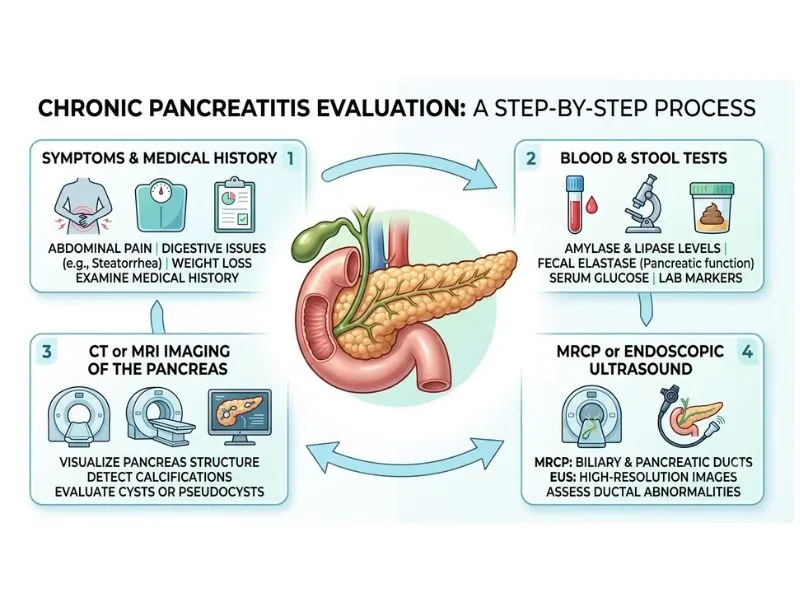
Diagnosing chronic pancreatitis can sometimes be difficult, particularly during its early stages.
Doctors usually consider:
- Symptoms and medical history
- Physical examination
- Blood tests
- Stool tests in selected patients
- Ultrasound
- CT scan
- MRI/MRCP
- Endoscopic ultrasound (EUS)
NIDDK notes that doctors use medical history, examination, laboratory tests and imaging to diagnose pancreatitis and look for its cause.
CT or MRI may be particularly useful when chronic pancreatitis is suspected. ACG guidance recommends CT or MRI as first-line imaging for diagnosis, with EUS considered when the diagnosis remains uncertain.
Which Tests Check Pancreas Function?
Chronic pancreatitis can affect the pancreas’s ability to digest food.
Doctors may look for signs of exocrine pancreatic insufficiency (EPI) when symptoms suggest poor digestion.
Possible signs include:
- Greasy stools
- Diarrhea
- Bloating
- Weight loss
- Abdominal discomfort
Chronic pancreatitis is one of the conditions that can cause exocrine pancreatic insufficiency.
Can Chronic Pancreatitis Cause Diabetes?
Yes.
The pancreas produces insulin, so long-term pancreatic damage can affect blood sugar control.
As chronic pancreatitis progresses, some people may develop diabetes because the pancreas becomes less able to produce insulin.
If you have chronic pancreatitis, your doctor may therefore monitor your blood glucose levels.
Can Chronic Pancreatitis Affect Digestion?
Yes.
A damaged pancreas may produce fewer digestive enzymes. This can make it harder for the body to properly digest and absorb nutrients.
Possible symptoms include:
- Loose or greasy stools
- Diarrhea
- Bloating
- Weight loss
- Nutritional deficiencies
In such cases, doctors may consider pancreatic enzyme replacement therapy (PERT) and nutritional support when appropriate.
How Is Chronic Pancreatitis Treated?
Treatment depends on the cause, symptoms and complications.
Treatment may include:
1. Pain Management
Doctors may use different approaches to control chronic pancreatic pain.
The treatment plan is individualized because pain can vary significantly from one person to another.
2. Pancreatic Enzyme Replacement
If the pancreas does not produce enough digestive enzymes, doctors may prescribe pancreatic enzyme medicines to improve digestion.
3. Nutrition Support
Some people with chronic pancreatitis may need dietary and nutritional support, especially if they have weight loss or poor absorption of nutrients.
4. Diabetes Management
If pancreatic damage causes diabetes, blood sugar management becomes part of the treatment plan.
5. Endoscopic Procedures
If a pancreatic duct is narrowed or blocked, an endoscopic procedure may sometimes be used to treat the obstruction.
6. Surgery
Surgery may be considered in selected patients, particularly when there is persistent pain, duct blockage or other complications that do not improve with other treatments.
Can Chronic Pancreatitis Be Cured?
Chronic pancreatitis causes long-term changes to the pancreas and can result in permanent damage.
There is no simple cure that reverses established chronic pancreatic damage, but treatment can help control pain, improve digestion, manage diabetes and address complications.
The goal is to identify the cause, manage symptoms and protect pancreatic function as much as possible.
Lifestyle Changes for Chronic Pancreatitis
Lifestyle changes can be an important part of management.
Avoid Alcohol
If you have pancreatitis, healthcare professionals strongly advise avoiding alcohol. Continued alcohol use can worsen chronic pancreatitis and increase the risk of serious complications.
Stop Smoking
Smoking can increase the risk of pancreatitis becoming chronic and may also increase pancreatic cancer risk.
Follow Your Doctor’s Diet Advice
There is no single diet that works for everyone with chronic pancreatitis. Your doctor or dietitian can recommend an eating plan based on your symptoms, nutrition and pancreatic function.
What Are the Complications of Chronic Pancreatitis?
Long-term pancreatic inflammation can lead to complications such as:
- Persistent abdominal pain
- Poor digestion
- Malabsorption
- Weight loss and malnutrition
- Diabetes
- Pancreatic duct blockage
- Pancreatic pseudocysts
- Permanent pancreatic damage
- Increased risk of pancreatic cancer
This is why ongoing medical follow-up is important.
When Should You See a Doctor?
You should seek medical evaluation if you have persistent or repeated:
- Upper abdominal pain
- Abdominal pain spreading to the back
- Unexplained weight loss
- Greasy or foul-smelling stools
- Recurrent vomiting
- Digestive problems
- New blood sugar problems
- Repeated episodes of pancreatitis
Severe abdominal pain, especially with vomiting, fever, jaundice or breathing problems, needs urgent medical attention . If you have repeated abdominal pain, unexplained weight loss, greasy stools or a history of pancreatitis, consult a gastroenterology specialist for proper evaluation.
Conclusion
Chronic pancreatitis is a long-term condition that can permanently affect the pancreas. It may cause upper abdominal pain, back pain, digestive problems, weight loss and, in some people, diabetes.
Early evaluation can help identify the cause and complications. Treatment may include pain management, pancreatic enzymes, nutritional support, diabetes management, endoscopic procedures or surgery when needed.
If you have repeated abdominal pain, unexplained weight loss, greasy stools or a history of pancreatitis, consult a gastroenterology specialist for proper evaluation.For more information, see this guide on chronic pancreatitis symptoms and causes.