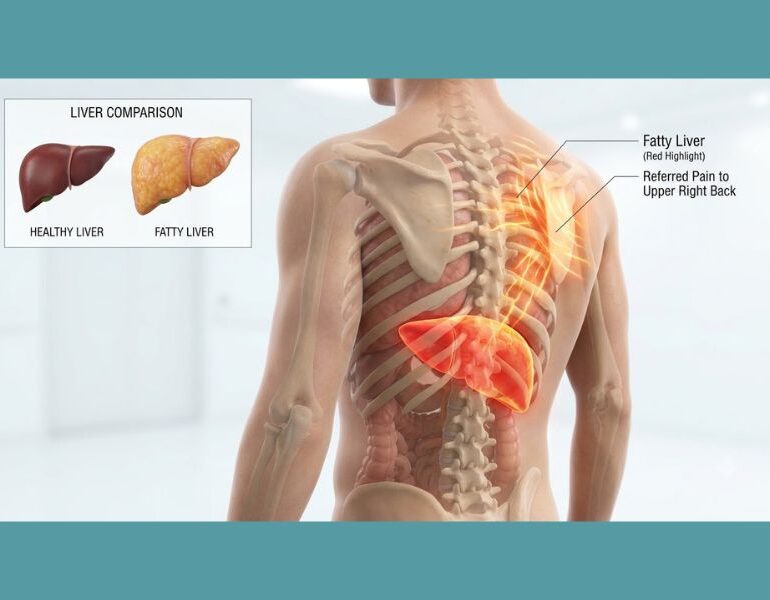
Can Fatty Liver Have Normal SGPT? What You Should Know
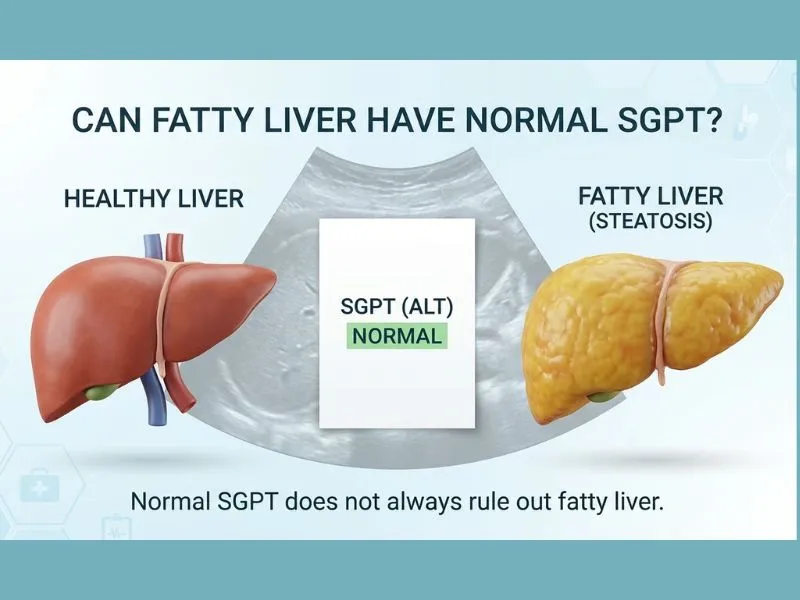
Can fatty liver have normal SGPT? Yes. A person can have fatty liver even when the SGPT (ALT) level is within the laboratory’s normal range. A normal liver enzyme report does not always mean that the liver is completely healthy.
Fatty liver, now often called metabolic dysfunction-associated steatotic liver disease (MASLD), can be silent and may cause few or no symptoms. Doctors therefore use blood tests along with imaging and other assessments when needed.
What Is SGPT?
SGPT is the older name commonly used for ALT (alanine aminotransferase), an enzyme found mainly in the liver.
When liver cells are injured, ALT can enter the bloodstream and its level may rise. However, ALT is only one part of liver assessment. A normal result does not by itself rule out fatty liver or liver scarring.
Can Fatty Liver Have Normal SGPT?
Yes. Fatty liver can be present even when SGPT is normal.
This is important because fatty liver can develop without obvious symptoms or a significant rise in liver enzymes. Some people may discover fatty liver during an ultrasound or another medical evaluation.
Therefore, if an ultrasound shows fatty liver, a normal SGPT should not automatically be taken as proof that there is no liver disease.
Why Can SGPT Be Normal in Fatty Liver?
Liver enzyme levels can vary from person to person. Fat accumulation in the liver does not always cause enough active liver-cell injury to raise ALT above the laboratory reference range.
Also, liver enzymes mainly provide information about possible liver-cell injury. They do not directly measure the amount of fat or the amount of fibrosis (scarring) in the liver.
That is why doctors may use additional tests when appropriate.
Does Normal SGPT Mean the Liver Is Healthy?
Not necessarily.
A normal SGPT is reassuring, but it should be interpreted together with your medical history, risk factors, other blood tests, and imaging.
For example, people with type 2 diabetes, obesity, abnormal cholesterol or triglycerides, or metabolic syndrome may have a higher risk of fatty liver and related liver problems.
How Is Fatty Liver Detected?
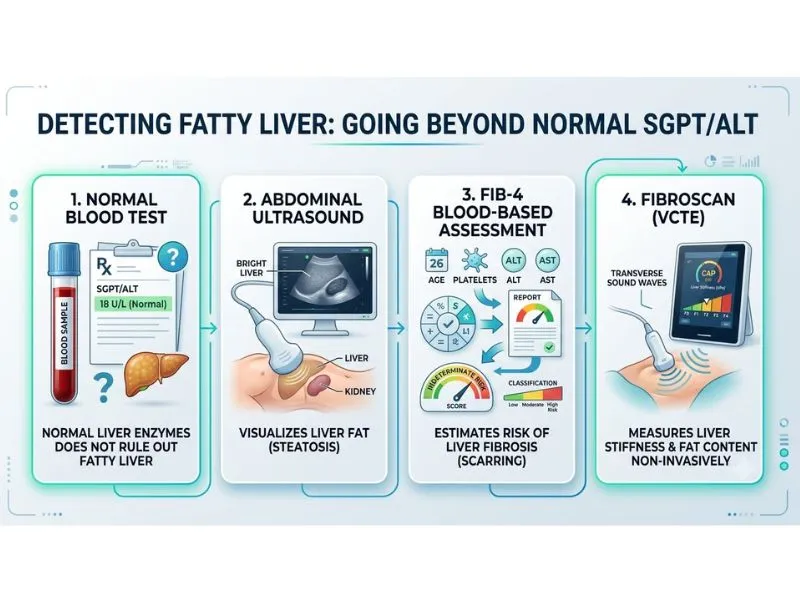
Doctors may use different tests depending on the individual situation.
Ultrasound
An abdominal ultrasound can show fat in the liver and is commonly used when fatty liver is suspected.
Liver Blood Tests
Doctors may check ALT/SGPT, AST/SGOT and other liver-related blood tests. These results can provide useful information but cannot tell the whole story on their own.
FIB-4 Score
Doctors can use blood-test results such as age, AST, ALT and platelet count to calculate the FIB-4 score. It can help estimate the risk of advanced liver fibrosis.
FibroScan
Elastography, including vibration-controlled transient elastography commonly known as FibroScan, can help assess liver stiffness and identify possible fibrosis.
If you want to understand your liver stiffness report, read our guide on FibroScan Score Meaning: How to Understand Your Liver Stiffness Report.
What Other Tests May Be Needed?
If fatty liver is suspected, your doctor may consider additional tests based on your risk factors and previous results.
These may include:
- Liver function blood tests
- Ultrasound
- FIB-4 calculation
- FibroScan or other elastography
- CT or MRI in selected cases
- Additional blood tests to look for other liver conditions
Routine imaging can show liver fat, while elastography can help assess liver stiffness and possible fibrosis.
Can Fatty Liver Exist Without Symptoms?
Yes. Fatty liver is often a silent condition, especially in its earlier stages.
Some people may feel completely well even when fatty liver is present. Others may experience tiredness or discomfort in the upper-right abdomen.
This is one reason routine health checks can be useful for people who have liver-disease risk factors.
Who Should Get Their Liver Checked?
Consider discussing liver evaluation with your doctor if you have:
Who Should Get Their Liver Checked?
Consider discussing liver evaluation with your doctor if you have:
- Fatty liver reported on ultrasound
- Type 2 diabetes
- High triglycerides or abnormal cholesterol
- Metabolic syndrome
- A history of abnormal liver tests
- A family or personal history of liver disease
- Other risk factors for MASLD
These factors can increase the likelihood of fatty liver and related liver problems.
When Should You See a Liver Specialist?
Do not rely only on your SGPT report if you have been told that you have fatty liver.
A liver specialist can help determine whether you need further evaluation, especially if you have diabetes, metabolic risk factors, abnormal imaging, persistent liver-test abnormalities, or concerns about liver fibrosis.
Conclusion
Can fatty liver have normal SGPT? Yes. A normal SGPT or ALT level does not completely rule out fatty liver or liver fibrosis. Fatty liver can be silent, so doctors may use blood tests, ultrasound, FIB-4 and FibroScan or other tests when appropriate.
If your ultrasound shows fatty liver even though your SGPT is normal, discuss the result with your doctor rather than assuming that no further evaluation is needed.