Can Thin People Also Have Fatty Liver?
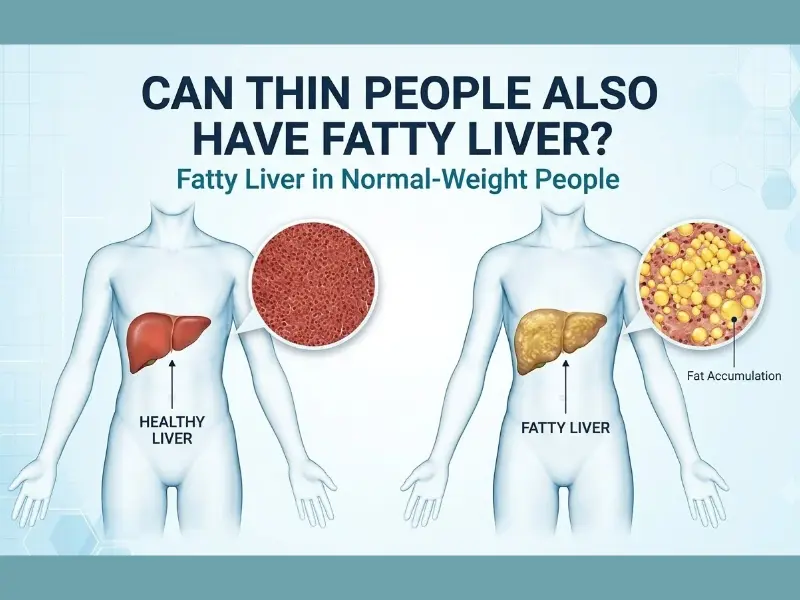
Yes, fatty liver in thin people is possible. Many people believe that fatty liver only affects people with a large body size. However, this is not always true.
Fat can collect inside the liver even when a person has a normal body weight. Doctors sometimes call this condition lean fatty liver disease.
A person may look slim but still carry excess fat around internal organs. Insulin resistance, high cholesterol, diabetes, and genetic factors can also increase the risk.
Therefore, body weight alone cannot tell whether your liver is healthy. Understanding the causes and warning signs can help you take the right steps.
What Is Fatty Liver Disease?
Fatty liver disease occurs when excess fat builds up inside liver cells.
Doctors now commonly use the term metabolic dysfunction-associated steatotic liver disease (MASLD) when fatty liver is linked to metabolic risk factors.
In some people, liver fat causes little or no damage. However, others may develop inflammation and liver scarring over time.
Doctors may use blood tests, ultrasound, FibroScan, and other investigations to assess liver health.
Can People With Normal Body Weight Have Fatty Liver?
Yes. A person does not need to have a large body size to develop fatty liver.
Some people have a normal BMI but carry excess fat around their internal organs. Others may have insulin resistance or abnormal cholesterol levels despite having a slim appearance.
Medical experts recognise fatty liver in people with normal body weight. In Asian populations, doctors may use different BMI thresholds when assessing metabolic health.
For this reason, a slim appearance does not rule out fatty liver.
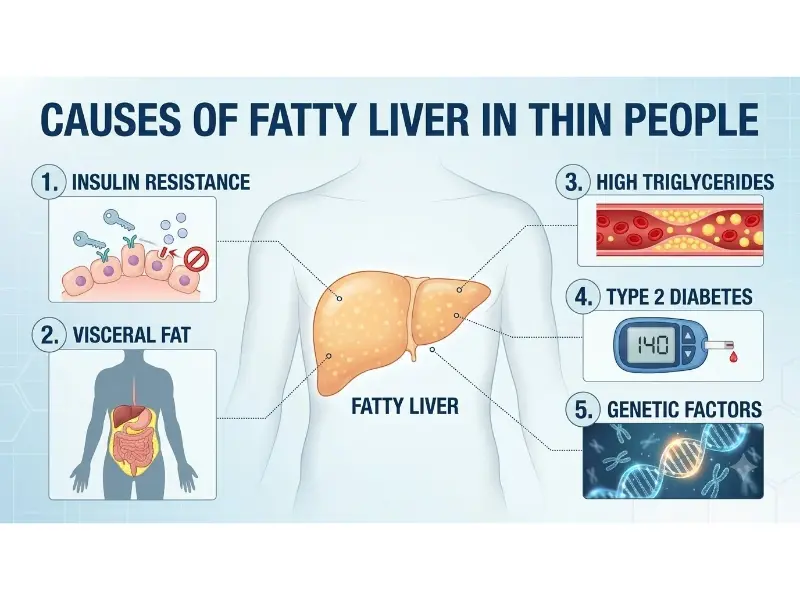
What Causes Fatty Liver in Thin People?
Several factors can contribute to fatty liver in people with normal body weight.
1. Insulin Resistance
Insulin helps the body control blood sugar levels. When the body does not respond properly to insulin, blood sugar and fat metabolism can become abnormal.
As a result, fat may build up inside liver cells.
Insulin resistance can occur even in people who look thin.
2. Visceral Fat
Some people have a normal body weight but carry excess fat around their internal organs.
Doctors call this visceral fat. It can increase the risk of insulin resistance and metabolic problems.
Therefore, a slim body shape does not always mean a person has a healthy fat distribution.
3. High Cholesterol and Triglycerides
Abnormal blood fat levels can increase the risk of fatty liver.
People with high triglycerides or unhealthy cholesterol levels may develop liver fat even when their body weight is within a healthy range.
Regular health checks can help identify these problems.
4. Type 2 Diabetes
Diabetes affects how the body manages blood sugar and insulin.
People with type 2 diabetes have a higher risk of developing fatty liver. This risk can also affect individuals with normal body weight.
5. Genetic Factors
Genes can influence how the body stores and processes fat.
Some people may have a higher tendency to develop fatty liver because of inherited factors. Family history can also provide useful information during medical evaluation.
6. Diet and Lifestyle
Food choices and daily habits can affect liver health.
Frequent intake of sugary drinks, excess added sugar, and highly processed foods may increase metabolic risk.
Similarly, sitting for long periods and getting little physical activity can affect insulin sensitivity.
7. Other Medical Causes
Not every case of fatty liver has the same cause.
Alcohol use, certain medicines, and some medical conditions can also lead to fat buildup in the liver. Doctors may investigate these possibilities before deciding on the diagnosis.
What Are the Symptoms of Fatty Liver in Thin People?
Many people with fatty liver have no noticeable symptoms, especially during the early stages.
However, some may experience:
- Unusual tiredness
- Mild discomfort in the upper right abdomen
- A feeling of heaviness in the abdomen
- Reduced energy
- Unexplained changes in liver blood test results
These symptoms are not specific to fatty liver. Other conditions can cause similar problems.
Therefore, proper medical evaluation is important rather than relying on symptoms alone.
How Is Fatty Liver Diagnosed in Thin People?
Doctors consider medical history, metabolic health, blood tests, and imaging results before making a diagnosis.
1. Blood Tests
Doctors may recommend tests such as:
- ALT and AST
- Lipid profile
- Fasting blood glucose
- HbA1c
- Other liver-related tests when needed
These tests help identify metabolic risk factors and possible liver injury.
However, normal liver enzyme levels do not completely rule out fatty liver.
2. Abdominal Ultrasound
An ultrasound can help detect excess fat in the liver.
It is a common first imaging test when doctors suspect fatty liver. However, ultrasound cannot reliably determine the amount of inflammation or liver scarring.
3. FibroScan
FibroScan is a non-invasive test that measures liver stiffness. It can help doctors assess the risk of liver fibrosis.
Some FibroScan examinations also measure fat in the liver using a parameter called CAP.
You can also read our related article about FibroScan score meaning to understand liver stiffness results.
4. FIB-4 Score
Doctors may use the FIB-4 score to estimate the risk of advanced liver fibrosis.
It uses age and certain blood test results. If the result suggests a higher risk, doctors may recommend additional tests.
The FIB-4 score does not diagnose fatty liver by itself.
Can Fatty Liver Become Serious in Thin People?
Yes. Fatty liver can progress in people with normal body weight.
Some individuals may develop inflammation called MASH (metabolic dysfunction-associated steatohepatitis). Over time, this condition can lead to liver fibrosis.
In advanced cases, severe scarring may develop and progress to cirrhosis.
The risk depends on several factors, including diabetes, insulin resistance, genetic factors, and the extent of liver damage.
Therefore, people with fatty liver should not ignore regular medical follow-up simply because they are thin.
How Can Thin People Manage Fatty Liver?
Treatment focuses on improving metabolic health and reducing liver fat. The right plan depends on the person’s body composition, medical history, test results, and underlying cause.
1. Follow a Balanced Diet
Choose a balanced eating pattern that includes:
- Fresh vegetables
- Whole fruits
- Whole grains
- Pulses and beans
- Nuts in suitable portions
- Healthy sources of protein
Also, reduce sugary drinks, excess added sugar, and highly processed foods.
2. Exercise Regularly
Regular physical activity can improve insulin sensitivity and support liver health.
Walking, cycling, swimming, and strength exercises may help. Choose activities that suit your fitness level and medical condition.
3. Check Blood Sugar and Cholesterol
Fatty liver can occur alongside diabetes, insulin resistance, and abnormal cholesterol levels.
Regular monitoring helps doctors identify these conditions and manage them appropriately.
4. Avoid Unnecessary Weight Loss
Thin people with fatty liver do not always need to lose weight.
If your body weight is already within a healthy range, focus on improving diet quality, physical activity, muscle strength, and metabolic health.
A doctor or dietitian can guide you on the right approach.
5. Avoid Alcohol and Unverified Supplements
Alcohol can contribute to liver damage. If you have fatty liver, discuss alcohol use with your doctor.
Also, avoid taking herbal products or supplements without medical advice. Some products can harm the liver.
When Should You Consult a Liver Specialist?
You should seek medical advice if:
- Your ultrasound shows fatty liver.
- Your liver enzymes remain abnormal.
- You have diabetes or high triglycerides.
- You have a family history of liver disease.
- You experience persistent abdominal discomfort.
- Your doctor suspects liver fibrosis.
A liver specialist can assess your reports, identify possible causes, and recommend suitable tests or treatment.
Conclusion
Fatty liver in thin people is a real medical condition. A person can have a normal body weight and still develop excess fat inside the liver.
Insulin resistance, visceral fat, diabetes, high triglycerides, genetics, and lifestyle habits can all contribute to this problem.
The important point is that a slim appearance does not guarantee a healthy liver. Blood tests, ultrasound, and FibroScan may help doctors assess liver health.
If your reports show fatty liver, consult a liver specialist and follow an appropriate care plan.