Alcoholic vs Non-Alcoholic Fatty Liver: What’s the Difference?
Introduction
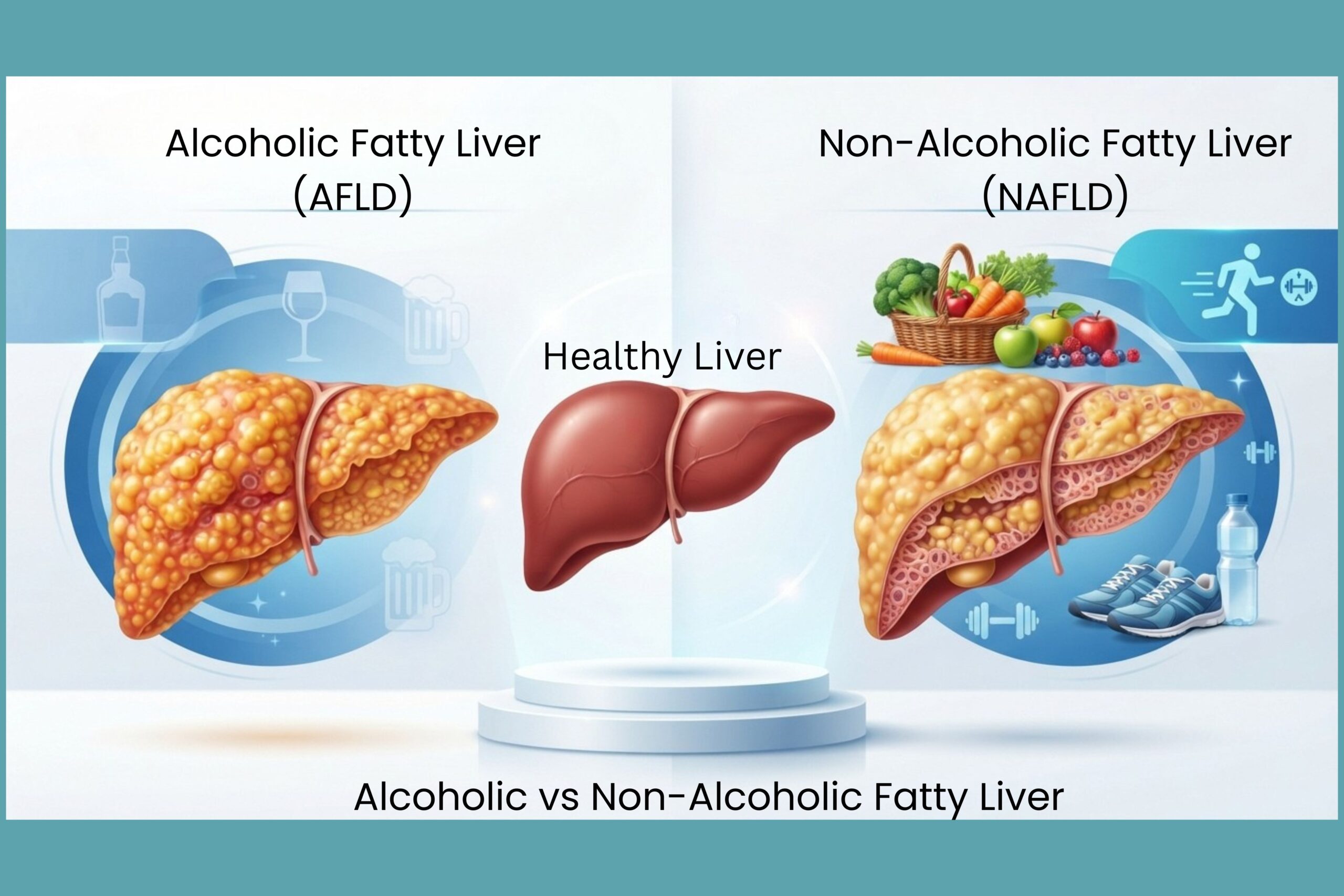
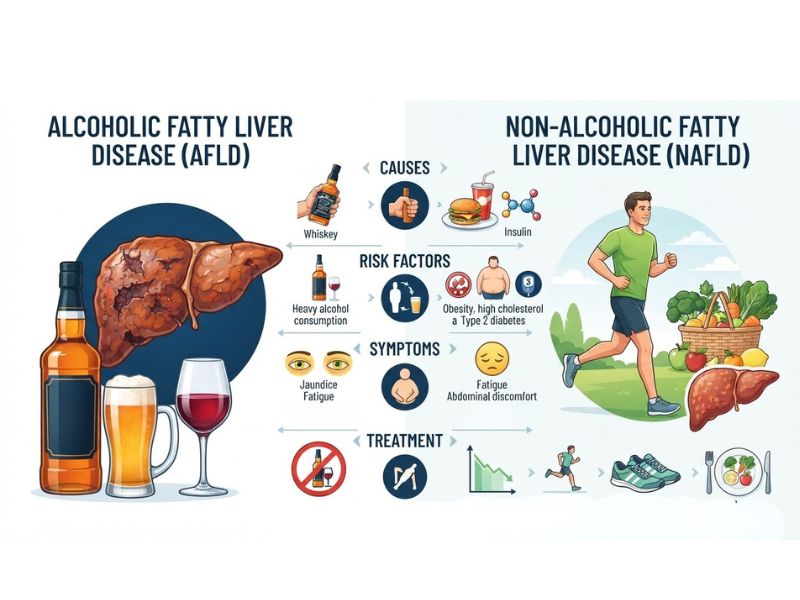
Fatty liver disease is becoming increasingly common worldwide. It occurs when excess fat builds up inside the liver. There are two main types: Alcoholic Fatty Liver Disease (AFLD) and Non-Alcoholic Fatty Liver Disease (NAFLD). Although both conditions involve fat accumulation in the liver, their causes, treatment, and prevention are different.
Understanding the difference between these two conditions can help you take the right steps to protect your liver and prevent long-term complications.
What Is Alcoholic Fatty Liver Disease?
Alcoholic Fatty Liver Disease develops due to excessive alcohol consumption. When the liver processes alcohol, harmful substances are produced that damage liver cells and lead to fat accumulation.
Common Causes
- Heavy alcohol intake
- Long-term drinking habits
- Poor nutrition
- Smoking combined with alcohol use
Alcoholic vs Non-Alcoholic Fatty Liver: Key Differences
| Alcoholic Fatty Liver | Non-Alcoholic Fatty Liver |
|---|---|
| Caused by alcohol | Not caused by alcohol |
| Linked to heavy drinking | Linked to diabetes, cholesterol, and lifestyle |
| May improve after stopping alcohol | May improve with weight management and lifestyle changes |
| Risk of liver damage if alcohol continues | Risk increases if untreated |
Common Symptoms
Both conditions may cause similar symptoms, including:
- Fatigue
- Pain or discomfort in the upper right abdomen
- Loss of appetite
- Nausea
- Unexplained weight loss
- Weakness
Many people have no symptoms during the early stages.
How Are These Conditions Diagnosed?
Your doctor may recommend:
- Liver Function Tests (LFT)
- Ultrasound Abdomen
- FibroScan
- CT Scan or MRI (if required)
- Blood tests
A detailed medical history helps identify the underlying cause. Read more:
FibroScan Score Meaning: How to Understand Your Liver Stiffness Report
Treatment Options
Treatment depends on the type of fatty liver disease.
For Alcoholic Fatty Liver Disease
- Stop alcohol completely
- Eat a balanced diet
- Correct vitamin deficiencies
- Regular medical follow-up
For Non-Alcoholic Fatty Liver Disease
- Follow a healthy diet
- Exercise regularly
- Maintain a healthy body weight
- Control diabetes and cholesterol
- Lose weight gradually if advised
Can Fatty Liver Be Prevented?
Yes. You can lower your risk by:
- Avoiding excessive alcohol
- Eating a balanced diet
- Staying physically active
- Managing blood sugar and cholesterol
- Having regular health check-ups
When Should You See a Liver Specialist?
Consult a liver specialist if you have:
- Persistent abdominal pain
- Fatigue that does not improve
- Yellow eyes or skin
- Abnormal liver test results
- A history of heavy alcohol use
- Fatty liver diagnosed on ultrasound
Conclusion
Although Alcoholic Fatty Liver Disease and Non-Alcoholic Fatty Liver Disease both involve fat buildup in the liver, their causes and treatment approaches are different. Recognizing the difference early and adopting healthy habits can help prevent serious liver damage. If you have symptoms or abnormal liver test results, consult a liver specialist for proper evaluation and treatment.
For trusted information about fatty liver disease, visit the National Institute of Diabetes and Digestive and Kidney Diseases (NIDDK)
.