
Acidity vs Gallbladder Pain: How to Tell the Difference
Acidity vs gallbladder pain is a common confusion because both conditions can cause upper abdominal discomfort, bloating, and nausea. Many people ignore gallbladder pain thinking it is simple acidity, which may delay proper treatment.
Understanding acidity vs gallbladder pain helps identify serious warning signs early and prevents complications related to gallstones or bile duct blockage.
What Is Acidity?
Acidity occurs when excess stomach acid irritates the stomach or food pipe.
Common causes include:
- Spicy foods
- Overeating
- Stress
- Tea and coffee
- Late-night meals
Acidity usually improves with antacids or dietary changes.
What Is Gallbladder Pain?
Gallbladder pain usually occurs due to gallstones or inflammation of the gallbladder.
The pain often starts after eating oily or heavy meals and may become severe over time.
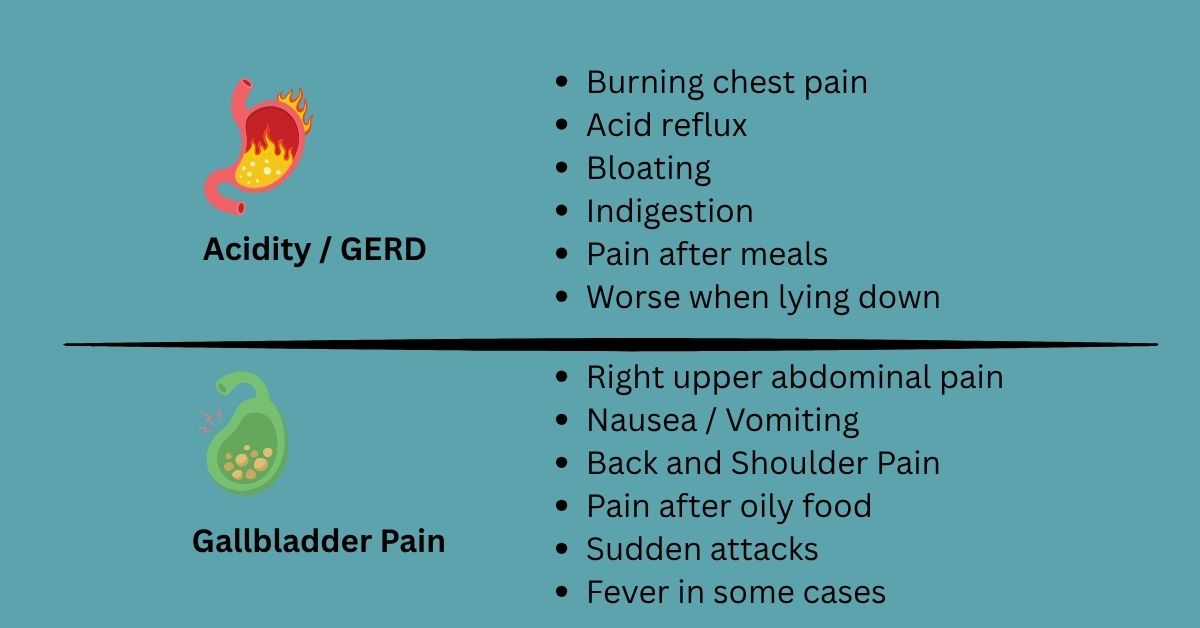
Acidity vs Gallbladder Pain: Key Differences
| Feature | Acidity | Gallbladder Pain |
|---|---|---|
| Pain Location | Chest or upper stomach | Right upper abdomen |
| Trigger | Spicy or acidic foods | Oily or fatty meals |
| Burning Sensation | Common | Less common |
| Pain Duration | Short-term | Can last for hours |
| Back/Shoulder Pain | Rare | Common |
| Fever/Jaundice | Rare | Possible |
Recognizing these differences helps in early diagnosis.
Symptoms of Acidity
Common acidity symptoms include:
- Burning chest pain
- Sour taste in mouth
- Bloating
- Burping
- Indigestion
Symptoms often worsen after spicy meals.
Symptoms of Gallbladder Pain
Gallbladder pain may cause:
- Severe right-sided abdominal pain
- Pain after oily food
- Nausea and vomiting
- Pain radiating to the back
- Fever or jaundice in severe cases
Gallbladder attacks may require urgent medical attention. Comparison of acidity and gallbladder pain symptoms
When Is Gallbladder Pain Dangerous?
Consult a doctor immediately if you experience:
- Severe abdominal pain
- Fever with pain
- Yellow eyes or skin
- Persistent vomiting
These symptoms may indicate gallbladder infection or bile duct blockage. Read more: Gallbladder Stone Symptoms You Should Not Ignore
How Are These Conditions Diagnosed?
Doctors may recommend:
For Acidity:
- Endoscopy
- Acid reflux evaluation
For Gallbladder Disease:
- Ultrasound abdomen
- Liver Function Test (LFT)
- MRCP if needed
Early diagnosis helps avoid complications.
Treatment Options
Acidity Treatment:
- Antacids
- Dietary changes
- Avoiding spicy foods
Gallbladder Pain Treatment:
- Medicines
- Gallbladder surgery
- ERCP for bile duct stones
Treatment depends on the underlying cause. According to the
World Health Organization
, digestive disorders are increasing globally due to unhealthy lifestyle habits.
Conclusion
Acidity vs gallbladder pain can sometimes feel similar, but the causes and treatments are very different. Ignoring gallbladder pain may lead to serious complications if gallstones or bile duct blockage are present.
If symptoms persist or worsen, consult a specialist for proper diagnosis and treatment.